


 English
 中文简体
中文简体Don't hesitate to send a message
E-Cargo Bike Motor Selection: Torque Needs, Hub Drive Specs, Supplier Checks
Content
- 1 Why Torque, Not Wattage, Decides Cargo Performance
- 2 Hub Drive or Mid-Drive: Where Each Fits a Cargo Program
- 3 What a Geared Hub Motor Brings to Cargo Applications
- 4 Specs and Interfaces to Lock Down Before Committing
- 5 Durability Evidence Worth Requesting from a Supplier
- 6 Custom Development and What It Changes in Practice
A loaded long-tail cargo bike with one rider, two child seats, and a week of groceries can push total rolling weight past 180 kg. On an 8% grade, that mass demands roughly double the wheel torque of an unloaded commuter, which is why cargo programs run into trouble when the motor is specified the same way as a city bike: peak wattage gets compared, the cheapest option wins, and field trials then surface overheated controllers, softened connectors, and gear noise within a few thousand kilometers. The practical answer is to reverse that order. For an e-cargo bike motor, rated wheel torque, thermal headroom under continuous load, and a controller matched to real start cycles decide whether the vehicle holds up in delivery or family service. Wattage on a datasheet, on its own, tells you very little.
Why Torque, Not Wattage, Decides Cargo Performance
Wheel torque follows directly from the load. A 180 kg combination of rider, bike, and cargo on an 8% grade needs roughly 50 Nm of continuous torque at the wheel just to hold speed, before accounting for acceleration, headwinds, and battery voltage sag. A comfortable specification therefore lands in the 70-90 Nm range, while an unloaded commuter runs happily on 30-45 Nm. This gap is the single most common specification error in cargo projects.
Wattage misleads because low-speed torque is a function of the reduction ratio and the phase current the controller delivers, not of the watt rating alone. A 750 W direct-drive hub limited to modest current can produce less usable torque from a standstill than a 500 W geared hub with a taller reduction and a controller sized for cargo starts. For procurement purposes, ask suppliers for torque curves measured at the wheel against controller current, rather than headline wattage.
| Riding condition | Typical total load | Suggested wheel torque | Design focus |
|---|---|---|---|
| Flat urban delivery | 120-150 kg | 45-60 Nm | Start-stop durability, connector vibration |
| Family and school runs | 150-180 kg | 60-75 Nm | Short 5-8% ramps, smooth engagement |
| Hilly routes and box bikes | 180-250 kg | 75-90 Nm or more | Thermal headroom, controller current limit |
Hub Drive or Mid-Drive: Where Each Fits a Cargo Program
Mid-drive systems push torque through the bicycle's chain and gears, so they multiply mechanical advantage on steep grades. The trade-off is that a cargo bike loads its drivetrain far harder than a commuter does: chains, cassettes, and bottom-bracket bearings wear faster, and a 150 kg-plus load turns the drivetrain into a maintenance item you plan around. Integration is also tighter, because the motor occupies the bottom bracket area that cargo decks and low step-through frames often need for other purposes.
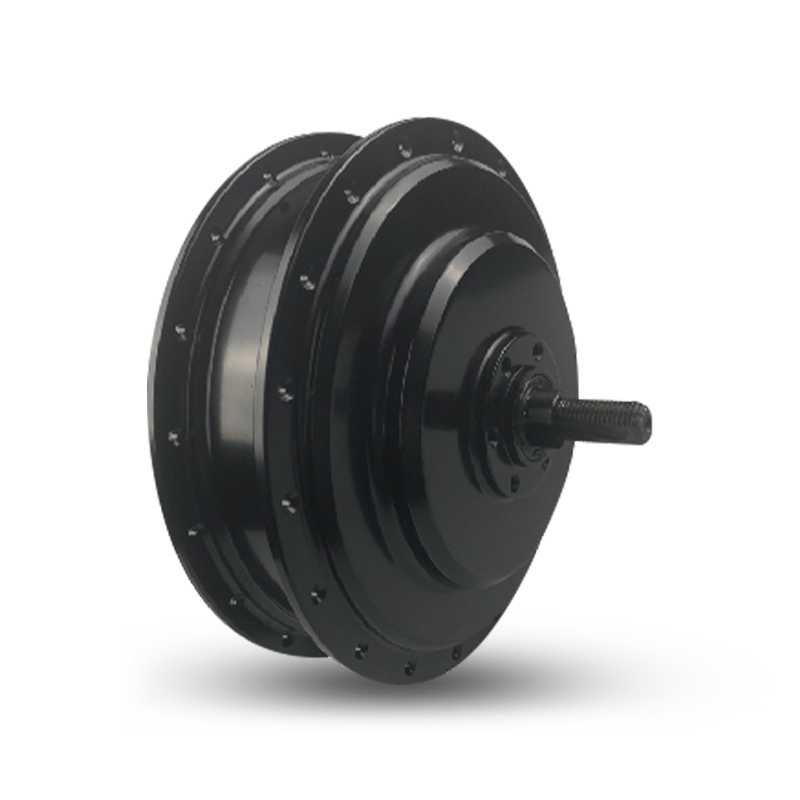
Hub drives apply torque directly at the wheel and leave the pedal drivetrain entirely conventional. For most cargo duty cycles, including urban delivery loops, family transport, and suburban gradients, a geared rear hub in the 500-750 W class covers the workload with lower cost, quieter operation, simpler waterproofing, and far less drivetrain wear. The engineering burden shifts to sizing the motor and controller for the load, since the hub cannot borrow the chain's gear ratios. We walk through the two architectures in more detail in our mid-drive versus hub-drive comparison, and for heavy three-wheeled or platform vehicles, dual-drive hub configurations extend the same logic further.
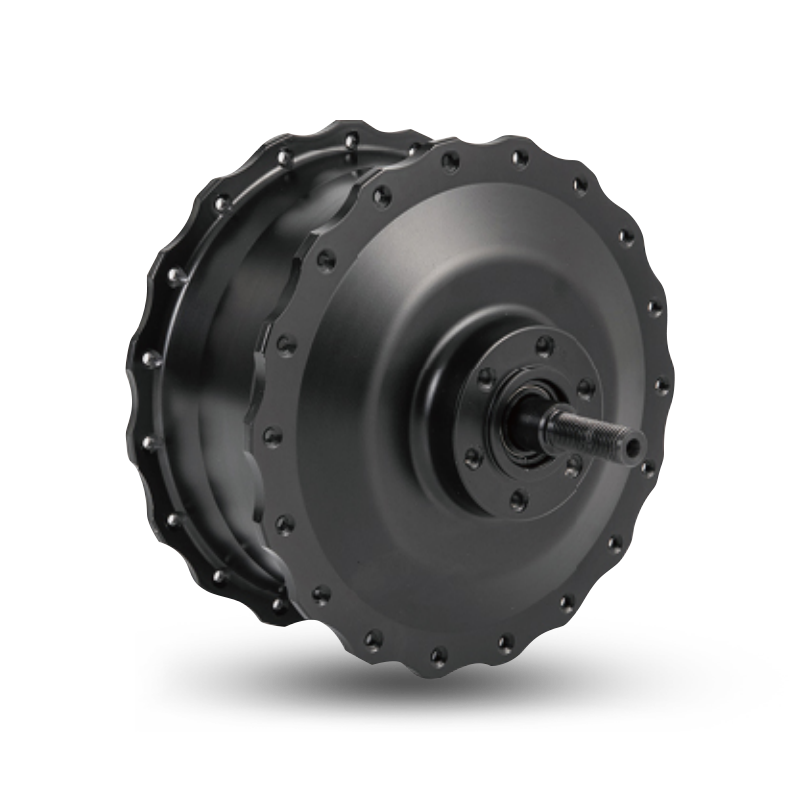
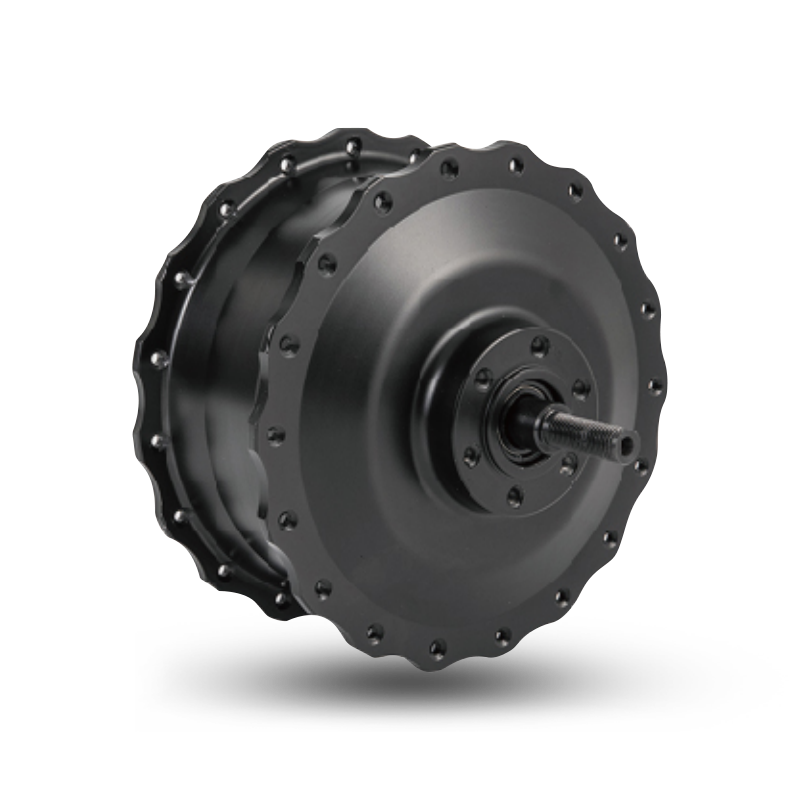
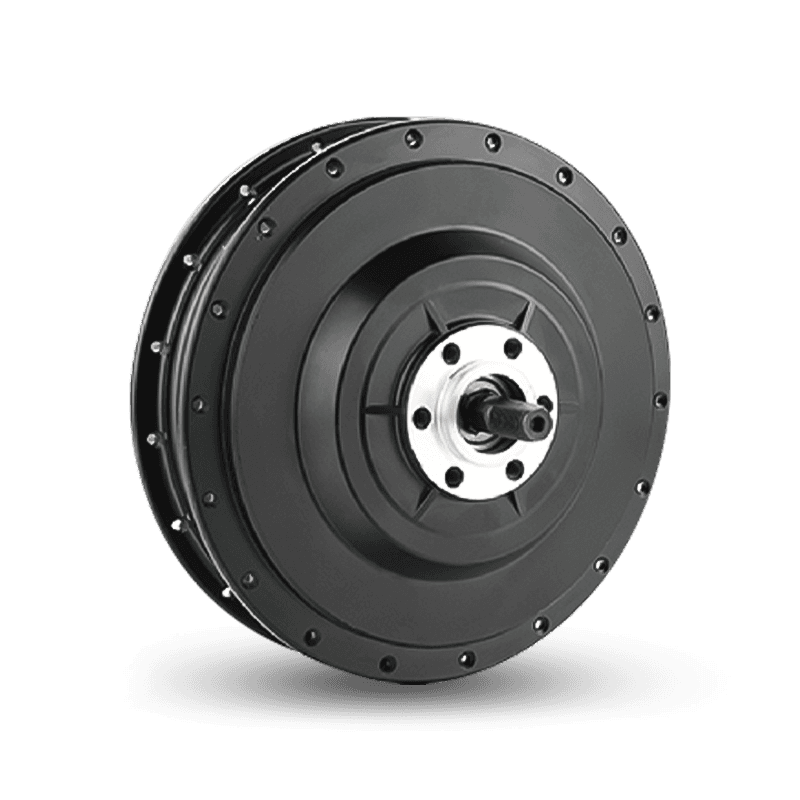 Geared Hub Motors for E-Cargo BikesThis geared hub motor range covers roughly 250 W to 2000 W with stall torques from 55 to 160 Nm, suiting the low-speed, high-torque duty of cargo bikes pulling away, climbing ramps, and creeping through traffic.View Product →
What a Geared Hub Motor Brings to Cargo Applications
Inside a geared hub, a compact high-speed motor drives a planetary reduction stage that multiplies torque several-fold before it reaches the shell, and a one-way clutch lets the wheel spin free of motor drag when pedaling unassisted. The gearing also keeps the motor near its efficient speed range at low wheel speeds, which is exactly where cargo bikes spend their time: pulling away from stops, climbing ramps, and creeping through traffic.
Gear material is the durability question. All-steel planetary gears last but whine; all-plastic gears run quietly but can deform under repeated cargo start cycles. Composite nylon-steel gears, with a steel tooth core inside a nylon body, were developed to take shock loads quietly, and this is the architecture behind our high-torque cargo hub motors; our patented nylon-steel gears have shipped into EU and US markets for years. Direct-drive hubs remain an option where regenerative braking and near-silent running matter more than weight, but they add two to three kilograms of rotating mass and drag when unassisted, which a loaded bike feels far more than a commuter does.
Specs and Interfaces to Lock Down Before Committing
Torque and power matter, but cargo programs fail just as often on interfaces. These are the points to settle with a supplier before samples and tooling:
- Controller matching. Low-speed torque is current-limited, so the controller's phase current rating, not just battery current, must be sized for starts under load. Integrated controller hubs simplify wiring and reduce water ingress points, but check where the heat dissipates.
- Axle standard and anti-rotation. Heavy loads generate reaction torque at the dropouts. Thru-axle mounts with proper torque plates prevent axle spin-out in aluminum frames, while nutted axles need washers and, on powerful builds, torque arms.
- Drivetrain interface. Cassette bodies suit multi-speed builds with wide gearing; freewheel bodies remain common on single-speed utility and fleet bikes. Confirm spoke flange diameter and rim pairing for the wheel size you ship.
- Ingress protection. Cargo bikes live outdoors year-round, so specify IP65 or better on the hub and vibration-rated connectors, and route harnesses away from cargo deck drains.
- Thermal validation. Ask for winding temperature data under continuous full load on a bench, not just peak numbers. A motor that holds rated torque for 30-60 minutes without exceeding its insulation class limits is the one that survives delivery duty.
On our own cargo programs, the thru-axle interface has become the default recommendation for high-load frames because it carries reaction torque without relying on dropout friction alone.
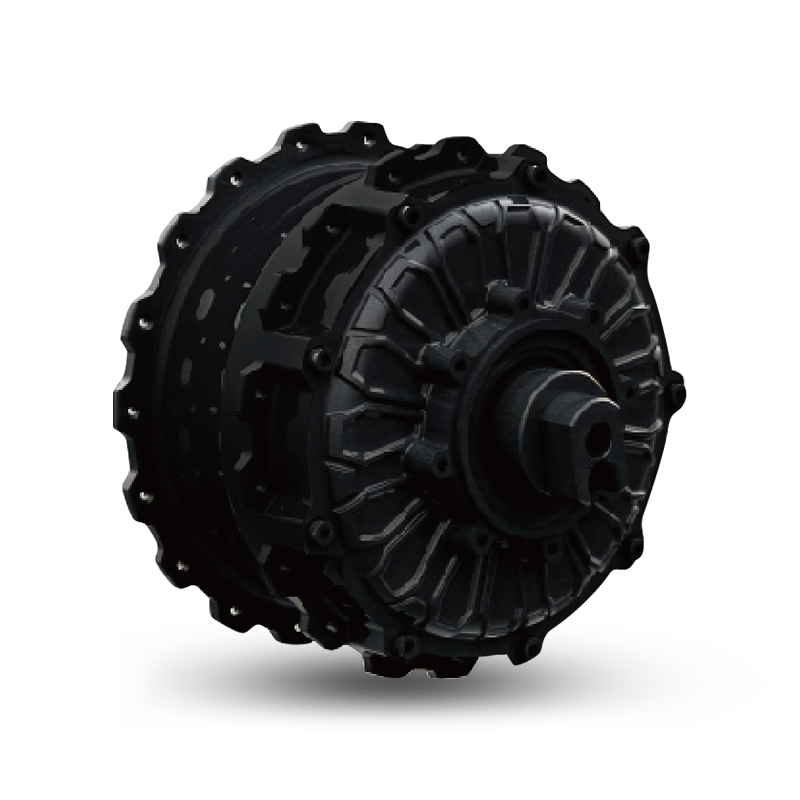 S-TYPE Max Thru-Axle Rear Hub MotorWith a 190mm dropout, 12mm thru-axle, 2000W rating, and over 170Nm peak torque on plastic-steel gears, this motor matches the high-load frames and validation testing discussed here.View Product →
Durability Evidence Worth Requesting from a Supplier
Claims are cheap; validation data is not. Before awarding a cargo motor program, ask for three things: bench curves of torque and temperature rise at continuous rated load, gear life testing that mimics real start cycles, and records from units already running in the field. ISO 9001 certification tells you a process exists, but the test bench is where a motor's real limits appear, which is why we run two dedicated EV motor test benches alongside CNC machining and die casting under one roof.
Field mileage is the other half of the evidence. Our mileage-guarantee program commits to more than 30,000 miles per motor, and more than 50 units have passed that benchmark so far, several of them exceeding 50,000 miles in delivery and commuter service. Numbers like these, or whatever equivalent a supplier can document, predict warranty cost far better than any peak rating on a datasheet.
Custom Development and What It Changes in Practice
Many cargo platforms cannot use an off-the-shelf motor outright: non-standard dropout spacing, a 20-inch wheel that needs a different reduction ratio, or a housing that must match a branded swingarm. Working directly with a manufacturer removes hand-offs at exactly these points. Because we cast our own housings on 500-ton die casting machines and finish them with precision CNC machining and micro-arc oxidation, housing geometry, wall thickness, and cooling fins can be adapted without shuttling the project between a motor supplier and a casting vendor. Custom shaft and motor development typically moves from interface drawings to validated samples in weeks rather than quarters.
For mid-range cargo builds in the 500-750 W class, a cassette-body rear hub in the E-type Pro family gives product teams a proven baseline that can be tuned through controller current and gearing instead of redesigned from zero.
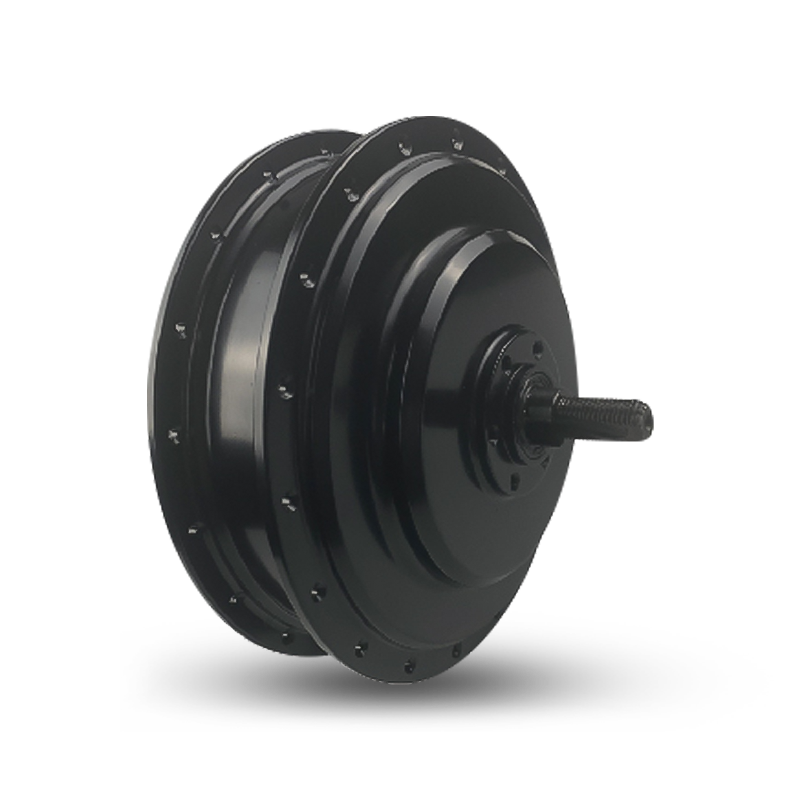 E-Type Pro RC750 Rear Hub MotorA 750W cassette-body rear hub with over 85Nm torque, 142mm dropout, and durable nylon-steel gears, offering a proven tunable baseline for mid-range cargo builds.View Product →
Size the motor by wheel torque and thermal headroom, choose a hub architecture for the majority of urban and suburban cargo duty, verify axle and drivetrain interfaces early, and demand bench plus field data before committing. Get those four decisions right and the motor disappears into the background of the vehicle, which is exactly what a good cargo bike should deliver. If you are specifying a drive unit for a cargo platform and want to talk through torque targets or interface options, our engineering team works with brands from first drawings through series production.
OUR PRODUCTS
Recommended Products
-
 E-Type F500 Front Hub Motor
The E-Type F500 front hub motor is designed for E-Cargo and E-MTB bikes, offerin...
-
 E-Type Pro RC750 Rear Hub Motor
The E-Type Pro RC750 Rear Hub Motor is designed for E-Cargo and E-MTB bikes, com...
-
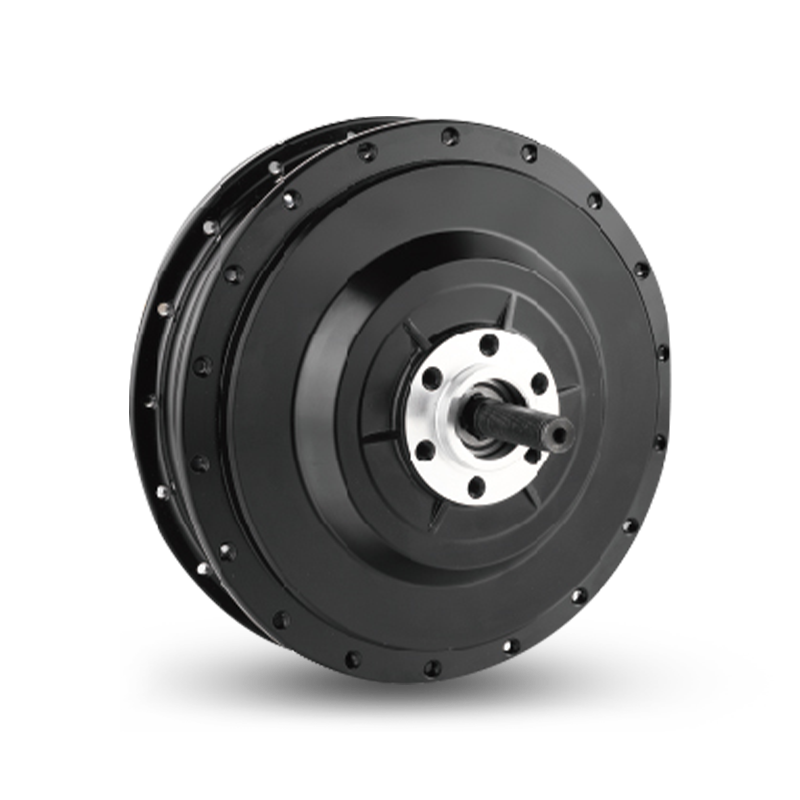 E-Type RF500 Rear Hub Motor
The E-Type RF500 Rear Hub Motor is designed for E-Cargo and E-MTB bikes, compati...
-
 E-Type Pro RF750 Rear Hub Motor
The E-Type Pro RF750 Rear Hub Motor is designed for E-Cargo and E-MTB bikes, com...
-
 S-Type Pro F1500 Front Hub Motor
The S-Type Pro F1500 front hub motor, designed for E-Carao and E-Fat bikes, offe...
-
 S-Type F750 Front Hub Motor
S-Type F750 is designed for E-Cargo and E-Fat. The rated power ranges from 500W ...
-
 S-TYPE Max THRU AXLE Rear Hub Motor
The S-TYPE Max thru-axle motor is designed for E-Fat, Moped, and Cargo applicati...
-
 C-Type R350 Rear Hub Motor
The C-Type R350 Rear Hub Motor, designed for city e-bikes, offers a rated power ...
If you are interested in our products, please consult us
Contact Details
- Address:No. 3 Dingqiao Rd, Jiangshan Town, Yinzhou District, Ningbo, Zhejiang Province, China
- Phone: +86 13806662915
- Email: K.zhang@hengtai-cn.com
Products
Quick Link
News Center
Mobile terminal
