


 English
 中文简体
中文简体Don't hesitate to send a message
How Fast Is 5000W in MPH? Real Top Speeds, Key Factors and Buying Guidance
Content
A 5000W electric bike, scooter, or light motorcycle typically tops out between 40 and 60 mph (64 to 96 km/h) at full throttle, and that is the range most builders and riders actually report. Lighter machines with efficient wheel sizes and a tucked riding position can reach the upper end of that band, while heavy platforms carrying cargo or climbing gradients may hold only 35 to 45. If you are specifying motors for a vehicle program rather than shopping for one bike, that spread is the important part: the watt rating sets the power budget, but battery voltage, controller current limits, wheel diameter, and total load decide where in the range a vehicle actually lands.
What 5000W Actually Means in a Drive System
Watts measure electrical power, and the basic relationship is simple: watts equal volts multiplied by amps. A 5000W system running at 72V draws roughly 70 amps from the battery and passes the same current through the controller and motor windings. That current flow is why 5000W platforms need thick phase wires, heavy-duty connectors, and battery cells rated for high continuous discharge. The electrical hardware around the motor, not just the motor itself, determines whether the rating is real.
The second thing to understand is the difference between rated (continuous) power and peak power. A motor marketed at 5000W may be rated for 2500 to 3000W of sustained output, with 5000W available only in short bursts before heat becomes the limiting factor. Sustained power determines whether a vehicle can hold its top speed down a long straight; peak power determines acceleration and how quickly a hill is cleared. Marketing material rarely separates the two, which is one reason published top speeds vary so widely.
Typical 5000W Top Speeds by Vehicle Type
Across the figures reported by builders and industry publications, most 5000W setups land between 40 and 60 mph. The vehicle category sets the outer boundaries more than the motor does.
| Vehicle type | Typical top speed | Main variables behind the spread |
|---|---|---|
| E-bike (fat tire or mountain platform) | 40-55 mph | Upright riding position, wide tires, battery voltage sag under load |
| Electric dirt bike | 45-60 mph | Gearing, wheel diameter, terrain, rider weight |
| Scooter or light e-motorcycle | 50-65 mph | Aerodynamics, larger wheel diameter, controller current tuning |
The reason the ceiling sits near 60 mph rather than far higher is aerodynamics. The power needed to push air out of the way rises with the cube of speed, so roughly eight times the power is required to double road speed against wind resistance alone. A 5000W system is genuinely fast by bicycle standards, but at 60 mph the rider's body is the largest source of drag, and no reasonable amount of extra wattage buys much more speed without a fairing and a smaller frontal area.
Why Two 5000W Vehicles Rarely Reach the Same Speed
Voltage and controller current limits
The same 5000W motor behaves differently on a 48V battery than on a 72V one. Voltage raises the motor's natural speed ceiling, while the controller's current limit determines how much torque is available to climb toward it. Two identical motors paired with different controllers can differ by 10 mph or more at wide-open throttle, which is why experienced builders specify the motor and controller as a matched set rather than as separate purchases.
Wheel diameter and winding choice
A hub motor's speed comes from its no-load RPM, which is fixed by the winding and the applied voltage. The wheel then converts that rotation into road speed: a 26-inch wheel covers more distance per revolution than a 20-inch wheel, so the same motor core runs faster on the larger wheel but delivers less torque at the contact patch. Compact platforms such as scooters and mopeds often use 12- to 20-inch integrated motor wheels, trading some top speed for strong launch torque in a small, sealed package.
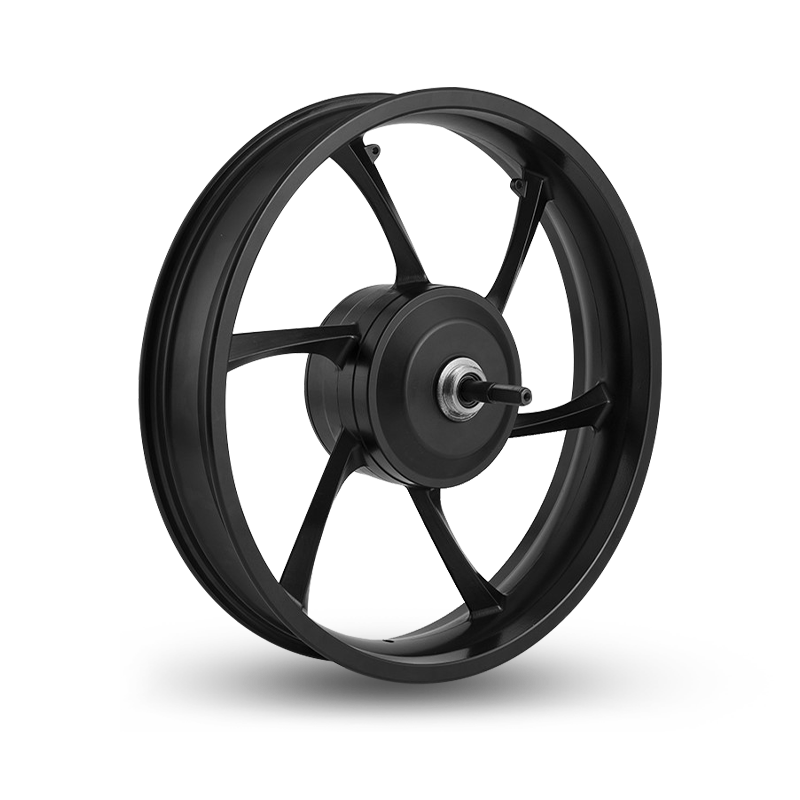 20 Inch S-Type Fat Tire Motor WheelThis integrated 20-inch wheel pairs a 750W rated hub motor with up to 95Nm of stall torque, suiting compact e-fat and cargo builds where launch torque matters more than top speed.View Product →
Weight, gradient, and drag
At 40 mph on level ground, an upright rider is already spending most of the available power on air resistance. Add a headwind, a passenger, or a two percent gradient and the controller pulls more current just to hold speed, which accelerates battery sag and heat buildup. Tires matter as well: wide fat tires can cost several mph compared with narrower road rubber on an otherwise identical machine.
How to Read a 5000W Spec Sheet Like a Manufacturer
A watt rating printed on a product page is not a performance specification. Before committing a high-power motor to a vehicle program, ask the supplier for the following:
- The continuous power rating, together with the ambient temperature and test conditions behind it
- A dyno or road curve showing speed versus time at full throttle until thermal cutback
- The recommended voltage window and controller current limit for the stated output
- Duty-cycle guidance: how long peak power can be held and what recovery time looks like
- Validation records, ideally from a supplier working under ISO 9001 with its own test benches
Suppliers that cast, machine, and test their own motors can usually produce this evidence quickly. Our own program combines two electric vehicle motor test benches with a documented mileage guarantee that has tracked hub motors beyond 30,000 miles in service, and both exist for the same reason: customers stopped accepting brochure numbers as proof of performance.
Where 5000W Sits Among Power Classes and Road Rules
In the United States, a three-class e-bike is limited to 750W with assisted speeds of 20 or 28 mph depending on the class. In the European Union, pedelecs are capped at 250W with assistance ending at 25 km/h. A 5000W machine therefore cannot be sold or registered as an e-bike in either market; it falls into the moped, motorcycle, or off-road category, with the licensing, insurance, and equipment requirements that follow.
For manufacturers, this is the practical reason most street-legal bicycle-format platforms stop at 1500W: it is roughly the point where frame strength, braking hardware, and legal classification remain coherent. Our own road-legal range runs from 250W commuter drives up to the S-type Pro F1500, which sits at that ceiling as a front hub motor for demanding city and trekking builds.
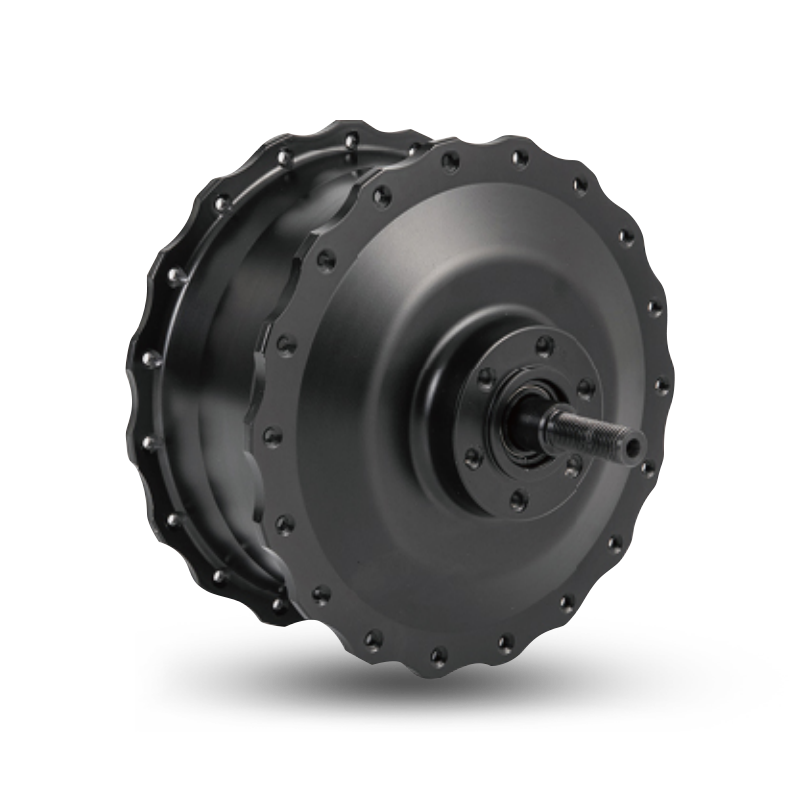 S-Type Pro F1500 Front Hub MotorA front hub motor rated up to 1500W with 145Nm peak torque, built for e-fat and cargo bikes at the practical ceiling of street-legal bicycle-format power.View Product →
The trade-offs between the two most common street power classes deserve study before anyone scales up, and we compare them directly in our guide to choosing between 1000W and 1500W hub motors. Moving from 1500W to 5000W does not simply add speed; it moves the vehicle into a different regulatory and engineering category altogether.
Matching Power to Purpose: A Sourcing Checklist
Whether the target is a 55 mph off-road platform or a 28 mph commuter fleet, the specification process follows the same sequence at HENTACH:
- Fix the legal class and target market first, because regulation caps power and assisted speed before engineering begins.
- Define the speed the vehicle must hold, not just reach, on a stated gradient with a stated payload.
- Match battery voltage and controller current to the motor's thermal envelope, and request test data rather than brochure figures.
- Confirm mechanical interfaces early: cassette, freewheel, or thru-axle mounting, disc brake side, and axle torque ratings.
- Agree on validation and life expectations, such as bench durability hours or mileage guarantees, before tooling starts.
Torque-biased builds deserve particular attention here. Cargo bikes, heavy fat-tire platforms, and all-terrain vehicles rarely need more speed, but they need a rear hub that survives sustained load and repeated hill starts; our S-type Max thru-axle rear hub motor is one example of a drive specified around axle strength and heat management rather than headline watts.
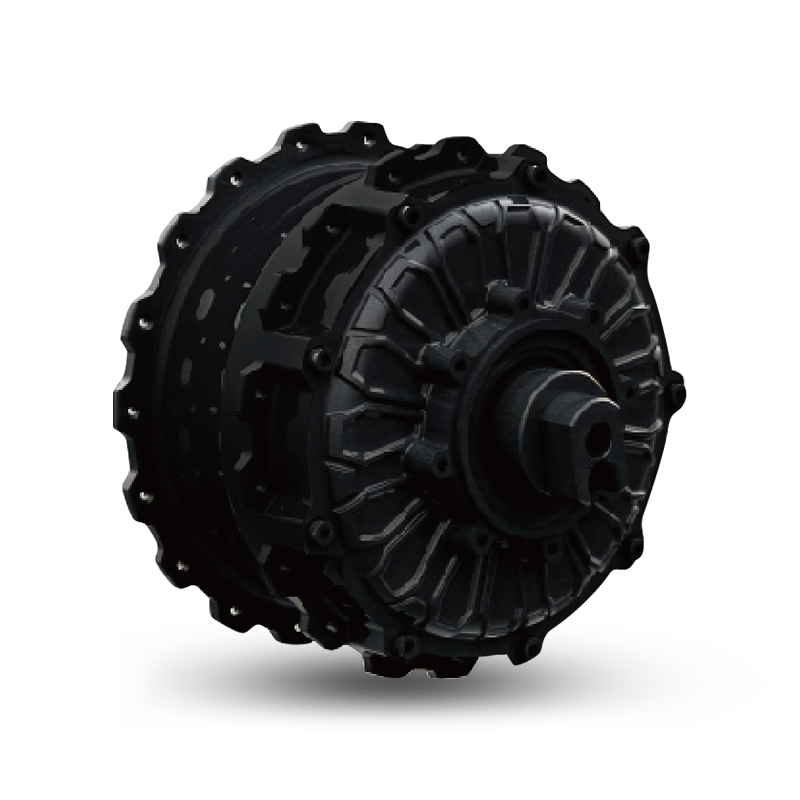 S-Type Max Thru-Axle Rear Hub MotorA rear hub motor with a 190mm dropout and 12mm thru-axle, delivering 2000W rated power and over 170Nm peak torque for cargo and fat-tire platforms under sustained load.View Product →
Where a project crosses into moped and motorcycle territory, the requirements shift again toward higher rotational speed and sustained thermal capacity, and purpose-built drives such as our electric motorcycle hub motors are engineered for that regime rather than adapted from bicycle components.
The short answer to how fast 5000W is in mph: 40 to 60 for most builds, with well-sorted lightweight machines reaching the mid-60s. The longer answer is that wattage is a budget, not a speed dial. Voltage sets the ceiling, the controller decides how hard you can lean on the motor, the wheel converts rotation into road speed, and drag determines how much of the budget survives at full throttle. Specifying those four variables together, with test data behind each one, is what separates a vehicle that hits its claimed top speed from one that only reaches it on the sticker.
OUR PRODUCTS
Recommended Products
-
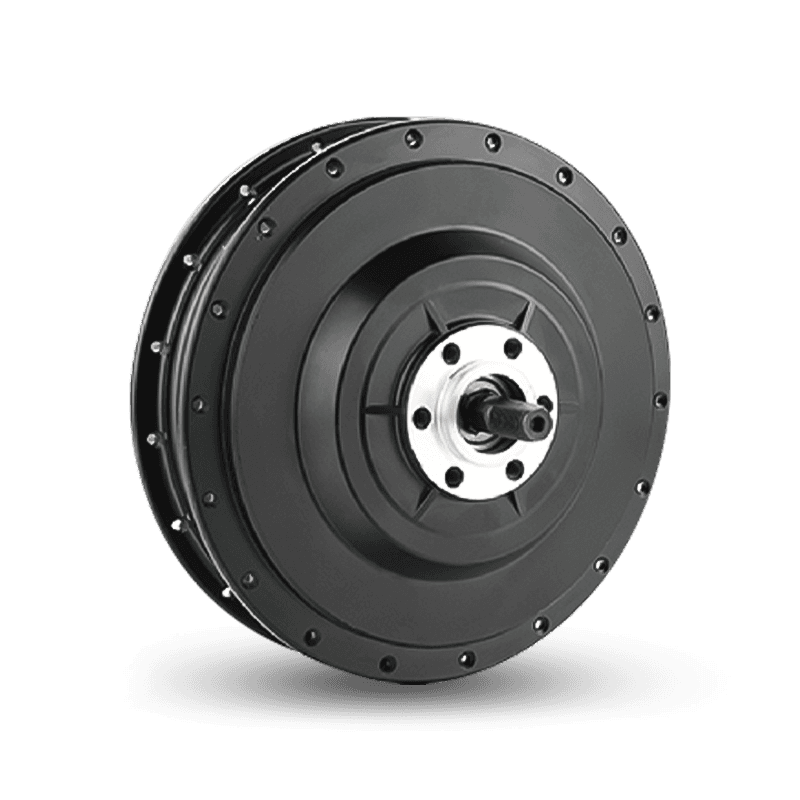 E-Type F500 Front Hub Motor
The E-Type F500 front hub motor is designed for E-Cargo and E-MTB bikes, offerin...
-
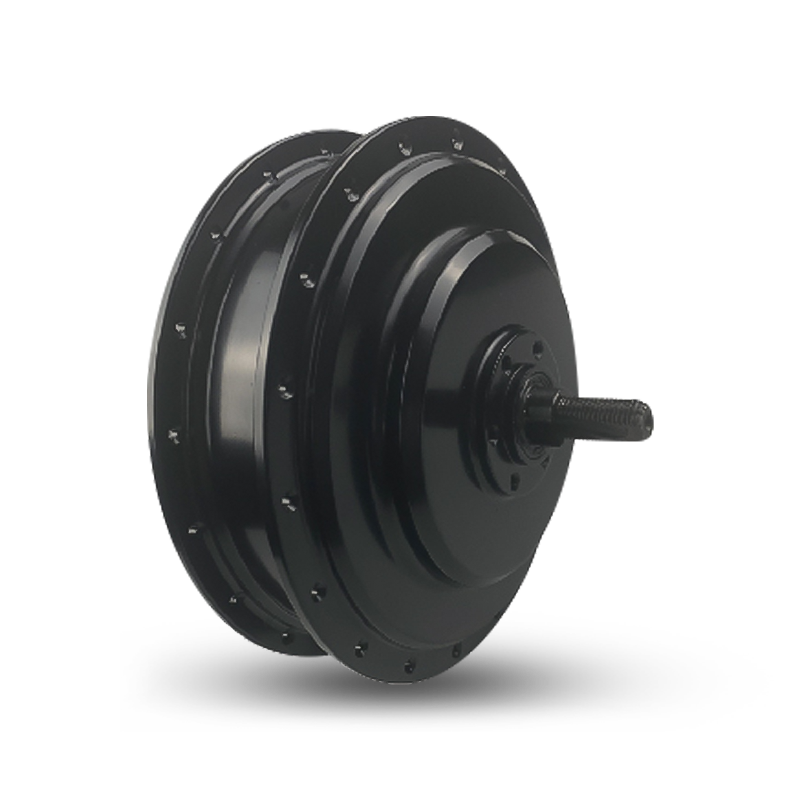 E-Type Pro RC750 Rear Hub Motor
The E-Type Pro RC750 Rear Hub Motor is designed for E-Cargo and E-MTB bikes, com...
-
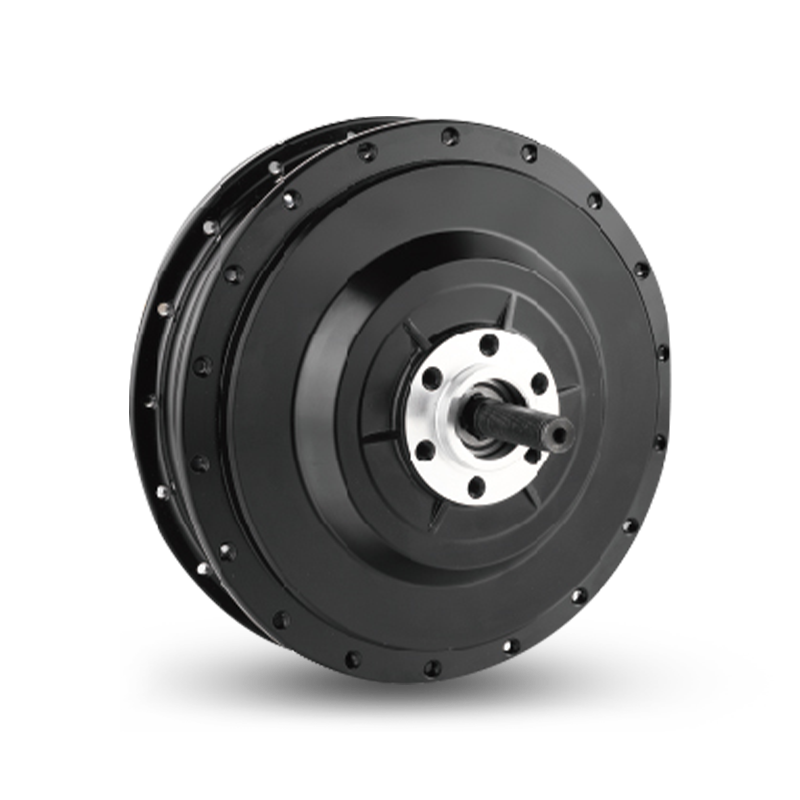 E-Type RF500 Rear Hub Motor
The E-Type RF500 Rear Hub Motor is designed for E-Cargo and E-MTB bikes, compati...
-
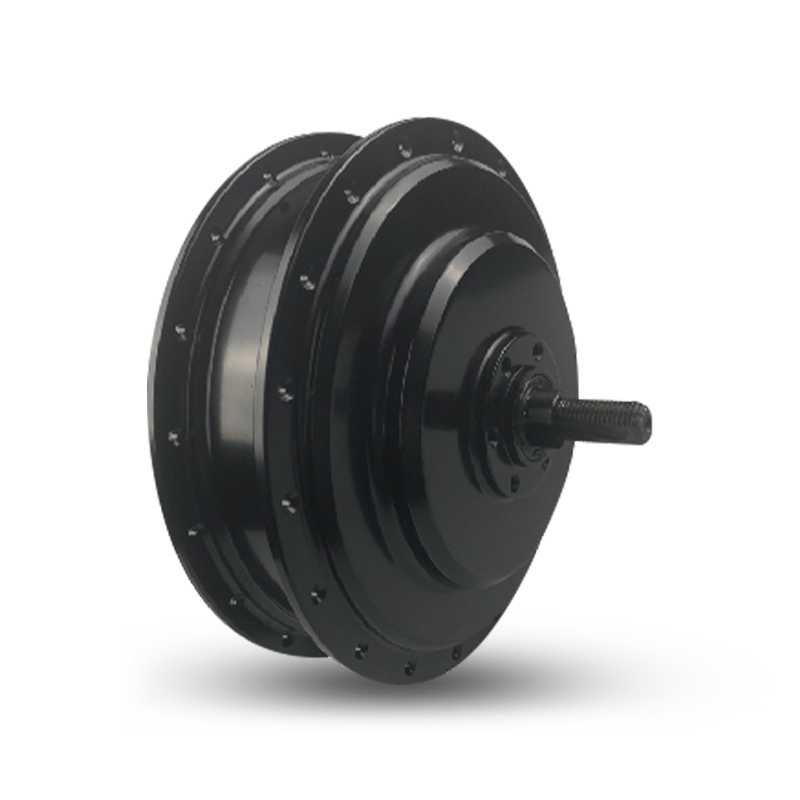 E-Type Pro RF750 Rear Hub Motor
The E-Type Pro RF750 Rear Hub Motor is designed for E-Cargo and E-MTB bikes, com...
-
 S-Type Pro F1500 Front Hub Motor
The S-Type Pro F1500 front hub motor, designed for E-Carao and E-Fat bikes, offe...
-
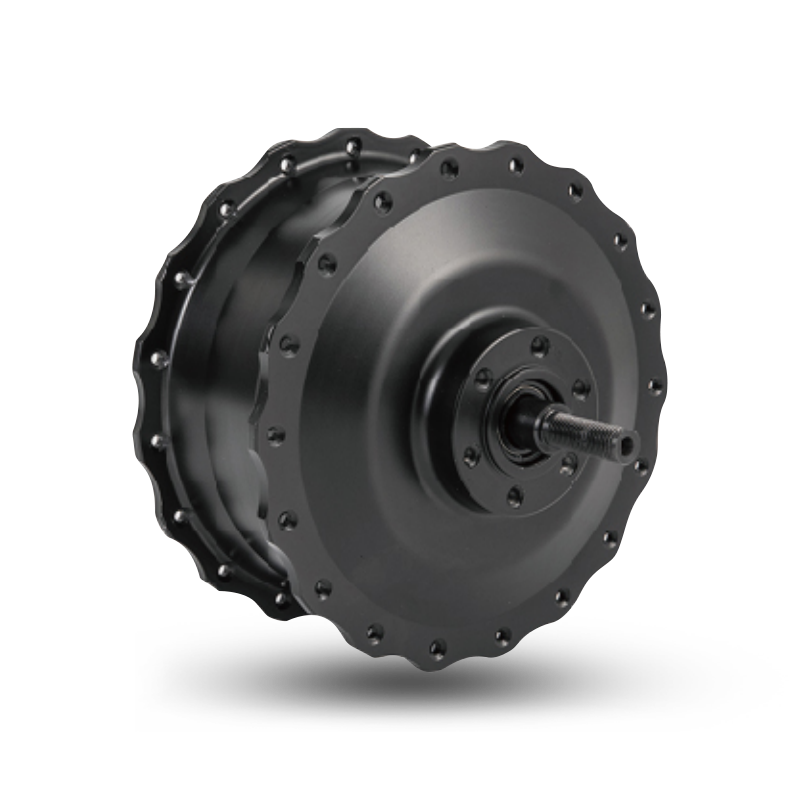 S-Type F750 Front Hub Motor
S-Type F750 is designed for E-Cargo and E-Fat. The rated power ranges from 500W ...
-
 S-TYPE Max THRU AXLE Rear Hub Motor
The S-TYPE Max thru-axle motor is designed for E-Fat, Moped, and Cargo applicati...
-
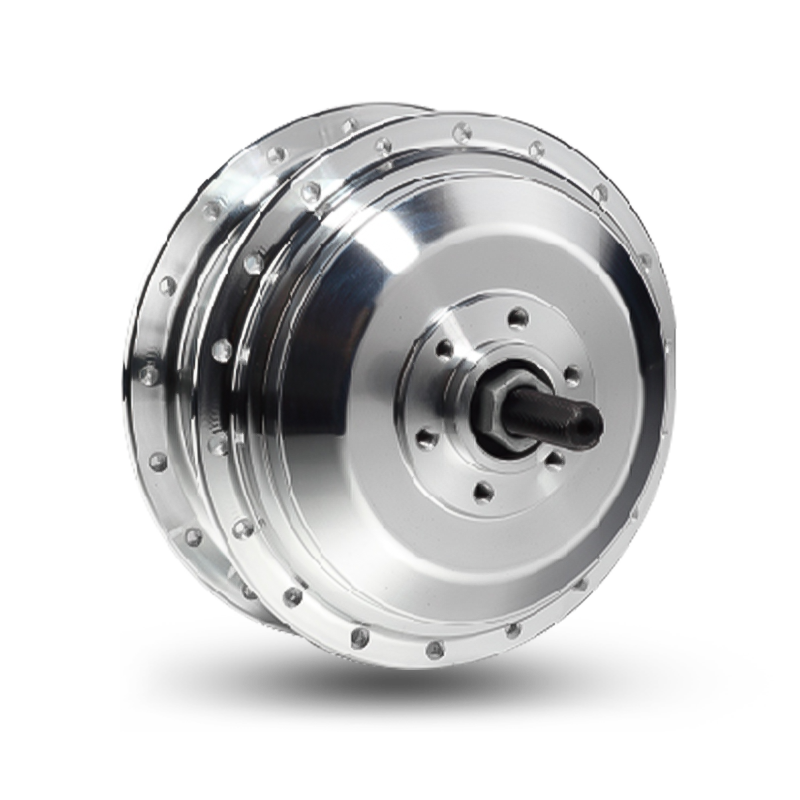 C-Type R350 Rear Hub Motor
The C-Type R350 Rear Hub Motor, designed for city e-bikes, offers a rated power ...
If you are interested in our products, please consult us
Contact Details
- Address:No. 3 Dingqiao Rd, Jiangshan Town, Yinzhou District, Ningbo, Zhejiang Province, China
- Phone: +86 13806662915
- Email: K.zhang@hengtai-cn.com
Products
Quick Link
News Center
Mobile terminal
