


 English
 中文简体
Don't hesitate to send a message
How a Mid-Drive Motor Works: Inside the Crank, Gears, Sensors, and Torque Flow
Content
- 1 Where a Mid-Drive Motor Sits
- 2 Inside the Housing: From Current to Crank Torque
- 3 How the Motor Knows How Hard to Push
- 4 Power Flow, Step by Step
- 5 Why Mid-Drive Motors Climb So Well
- 6 Mid-Drive vs Hub Drive at a Glance
- 7 Where Hub Motors Still Make Sense
- 8 Keeping Either Motor Healthy
- 9 Choosing a Layout for Your Own Build
Ask most riders what a mid-drive motor does and you will hear the simple version: it helps you pedal. True, but the interesting part sits one layer deeper. A mid-drive motor is a compact geared electric machine that takes direct current from the battery, converts it into rotation, and feeds that rotation into the same chainring, chain, and cassette your legs already use. Because the power enters the drivetrain instead of bypassing it, almost everything about the way the bike feels, from climbing power to range to chain wear, follows from that single design decision.
We have been building hub motors in Ningbo for a long time, which means we spend plenty of hours studying the other layout too. A mid-drive unit solves some problems beautifully and creates others. Here is what is actually happening inside that housing at the bottom bracket.
Where a Mid-Drive Motor Sits
A mid-drive motor mounts at the bottom bracket, concentric with the crank axle and right between the pedals. Its output reaches the chainring, then travels down the chain to the rear cassette and finally to the rear wheel.
That makes the crankset a junction. Two sources of power meet there, your legs and the motor, and both leave through a single chain. On a hub-drive bike the two paths stay separate: your legs drive the chain while the motor inside the wheel hub turns the rim directly and never touches the drivetrain.
Inside the Housing: From Current to Crank Torque
Stator, windings, and magnets
Nearly all mid-drive motors are three-phase brushless DC machines. A stator carrying copper windings sits inside the housing, and a rotor with permanent magnets spins around it. Hall sensors report the rotor's position so the controller always knows which coil to energize next. Energize the coils in sequence and the rotor turns; that is the whole trick.
The reduction stage
A small motor is happy spinning at a few thousand rpm, while a human pedals at roughly 60 to 90 rpm. Something has to bridge that gap. Planetary gear sets, often two stages with combined ratios around 15:1 to 25:1, trade speed for torque. Tooth shape, backlash, and grease selection decide how quiet the unit feels and how well it survives a cold morning.
The one-way clutch
Between the gearbox and the chainring sits a sprag or roller clutch. It lets the motor drive the chain without back-driving your pedals, so you can coast or pedal with the motor off without dragging a dead gearbox around.
How the Motor Knows How Hard to Push
Torque sensors and cadence sensors
Two sensor families dominate. A cadence sensor simply detects that the cranks are turning and switches assist on. A torque sensor measures how hard you push, usually through strain gauges in the bottom bracket or by reading twist in the axle, and scales motor output to match. Torque sensing is what makes a mid-drive bike feel like an extension of your legs rather than a switch.
The controller's job
The controller reads those sensors, watches battery voltage and speed, and chops DC into three-phase pulses. With field-oriented control it adjusts timing hundreds of times per second, which keeps the motor quiet and efficient while enforcing the cut-off speed and protecting the pack from deep discharge.
Power Flow, Step by Step
- The battery supplies DC to the controller.
- Sensors report pedal force, cadence, and wheel speed.
- The controller converts DC into three-phase current and fires the stator coils in sequence.
- The rotor spins, fast and with modest torque.
- Planetary gears reduce speed and multiply torque.
- A one-way clutch passes that torque to the chainring.
- Chain, cassette, and rear wheel deliver it to the road.
Why Mid-Drive Motors Climb So Well
The advantage is not raw power, it is leverage. Because the motor feeds the drivetrain, it inherits the bike's gears. Drop into a low gear on a steep grade and the motor keeps spinning in its efficient range while the wheel turns slowly with multiplied torque. A hub motor cannot do that: its speed is tied to wheel speed, so on a hard climb it runs slowly, heats up, and loses efficiency exactly when you need it most.
The trade-offs are just as real. Motor torque passes through the chain and cassette on every ride, so those parts wear faster. Riders also have to shift sensibly, because lugging a mid-drive in too tall a gear strains the drivetrain and the internal gearbox alike.
Mid-Drive vs Hub Drive at a Glance
| Aspect | Mid-Drive | Hub Drive |
|---|---|---|
| Motor location | At the bottom bracket, between the pedals | Inside the front or rear wheel hub |
| Power path | Chainring, chain, cassette, rear wheel | Directly through the wheel it is built into |
| Uses the bike's gears | Yes, output is multiplied by the selected gear | No, motor speed follows wheel speed |
| Steep, loaded climbs | Holds torque by dropping to a low gear | Torque fades as wheel speed drops and heat builds |
| Weight placement | Central and low | At one end of the bike |
| Drivetrain wear | Higher, especially chain and cassette | Lower, the drivetrain carries pedal force only |
| Tire and wheel service | Standard wheel, simple repairs | Motor cable and torque hardware to manage |
| Cost and complexity | Higher unit cost, more integration work | Simpler, lower cost, easy to retrofit |
| Best suited to | Technical climbing and heavy cargo on hills | Commuting, flat routes, and shared fleets |
Where Hub Motors Still Make Sense
We build hub motors, so take this with the appropriate grain of salt, but the layout earns its place. There is no chain running through the motor, no gearbox to service, and no requirement for the rider to think about gears. Power goes straight to the wheel, throttle response feels immediate, and a fleet of commuting bikes stays inexpensive to maintain. Our own geared hub motor technology uses composite gearing and internal reduction to reach useful torque at low wheel speeds without the drivetrain penalties of a mid-drive.
For delivery bikes on flat city routes, industrial platforms, and light commuters, that combination is hard to beat.
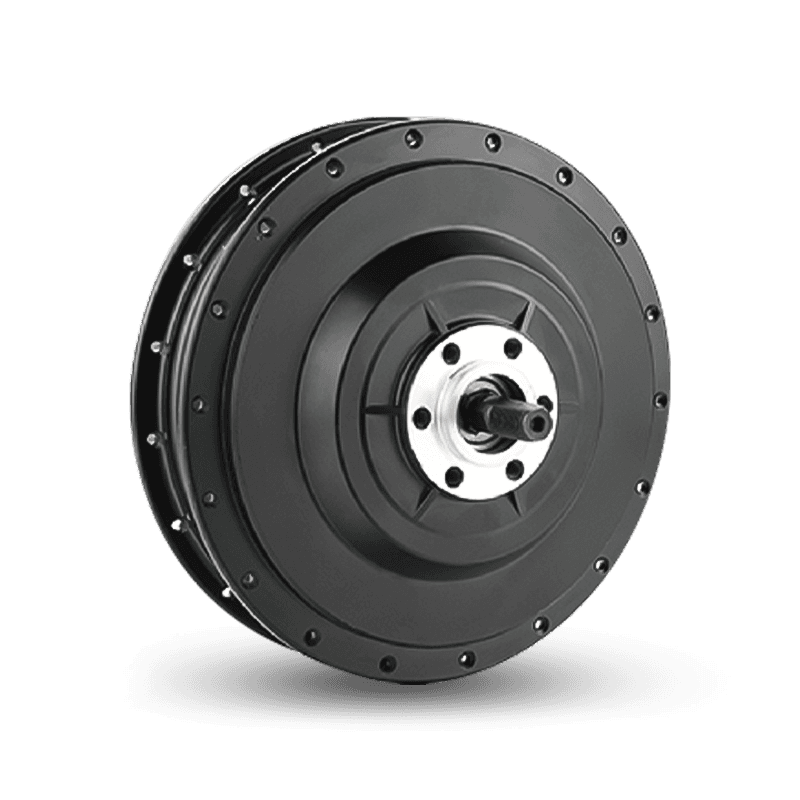 HENTACH E-Cargo Bike Hub Motor SeriesExplore HENTACH hub motors for cargo e-bikes, from 250W to 2000W with front, rear, and through-axle options for varied loads and terrain.View Product →
Keeping Either Motor Healthy
- Keep the chain clean and lightly lubricated, especially on a mid-drive, where it carries motor torque.
- Shift before the hill, not halfway up it.
- Avoid riding in a gear so tall that the motor labors at walking pace.
- Store batteries between roughly 30 and 80 percent charge if the bike sits for weeks.
- Listen for new noises. Whine, clicking, or rumble usually points to bearings, gears, or loose hardware.
- Check axle nuts and motor mounting bolts after the first few hundred kilometers.
Choosing a Layout for Your Own Build
Start with the terrain and the duty cycle, not the spec sheet. Flat routes, throttle preference, tight budgets, and riders who would rather not think about shifting all point toward a hub motor. Long climbs, heavy loads, and riders who enjoy working the gears point toward a mid-drive. Plenty of product lines end up offering both, and there is nothing wrong with that.
If you are weighing hub drive for a new model, our hub motor solutions cover front and rear options from 250W commuter units up to high-torque builds for cargo and commercial vehicles.
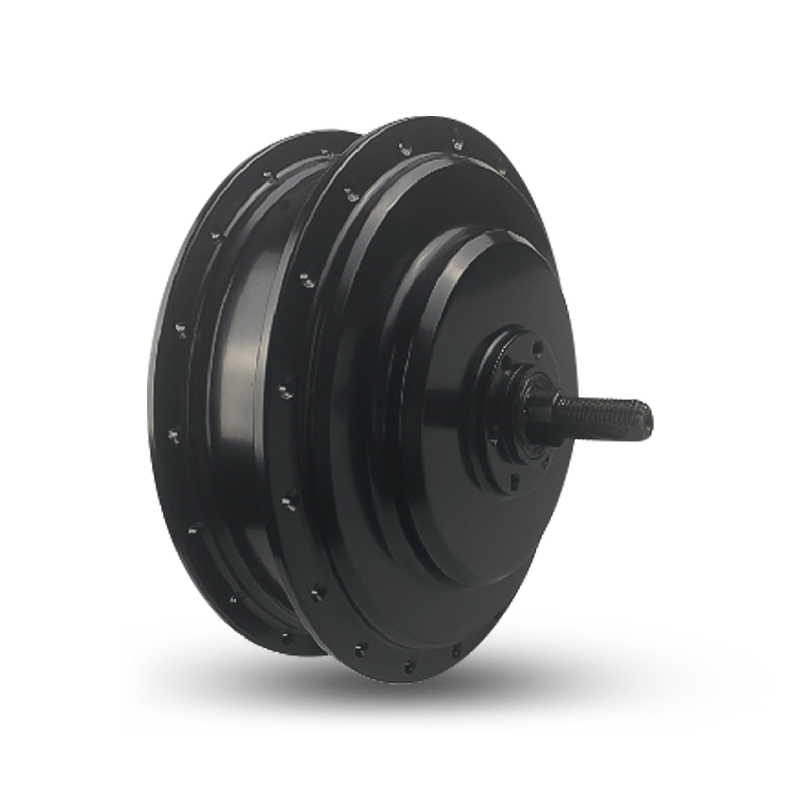 E-Type Pro RC750 Rear Hub Motor for Cargo and eMTBA 350-750W rear hub motor with 85Nm torque, 142mm dropout, and 8-10 speed cassette compatibility for high-load cargo and eMTB builds.View Product →
A mid-drive motor is really a small high-speed motor, a two-stage gearbox, a one-way clutch, and a set of sensors working as one unit. The electrical part is straightforward. The clever part is where the output goes: into your drivetrain, where every gear you select multiplies what the motor can do. Understand that, and the difference between a mid-drive and a hub drive stops being a matter of opinion and becomes a simple question about your route, your load, and how much maintenance you want to live with.
OUR PRODUCTS
Recommended Products
-
 E-Type F500 Front Hub Motor
The E-Type F500 front hub motor is designed for E-Cargo and E-MTB bikes, offerin...
-
 E-Type Pro RC750 Rear Hub Motor
The E-Type Pro RC750 Rear Hub Motor is designed for E-Cargo and E-MTB bikes, com...
-
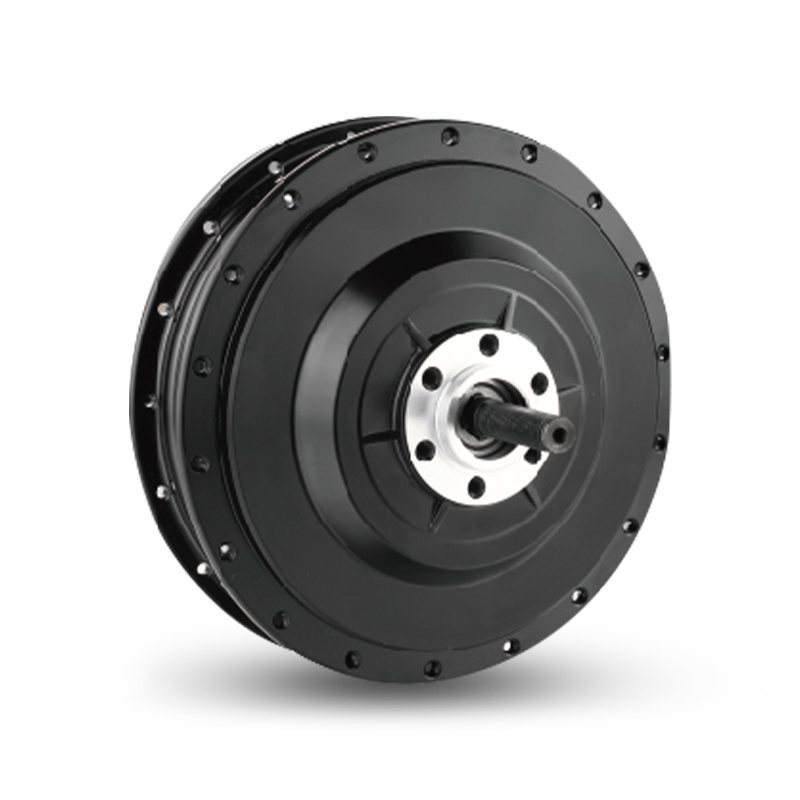 E-Type RF500 Rear Hub Motor
The E-Type RF500 Rear Hub Motor is designed for E-Cargo and E-MTB bikes, compati...
-
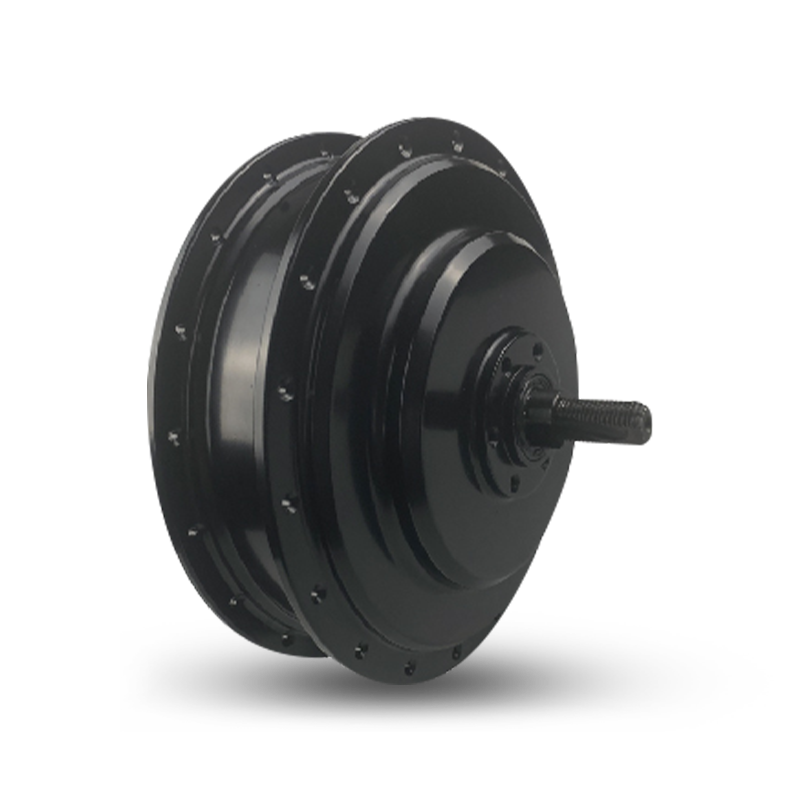 E-Type Pro RF750 Rear Hub Motor
The E-Type Pro RF750 Rear Hub Motor is designed for E-Cargo and E-MTB bikes, com...
-
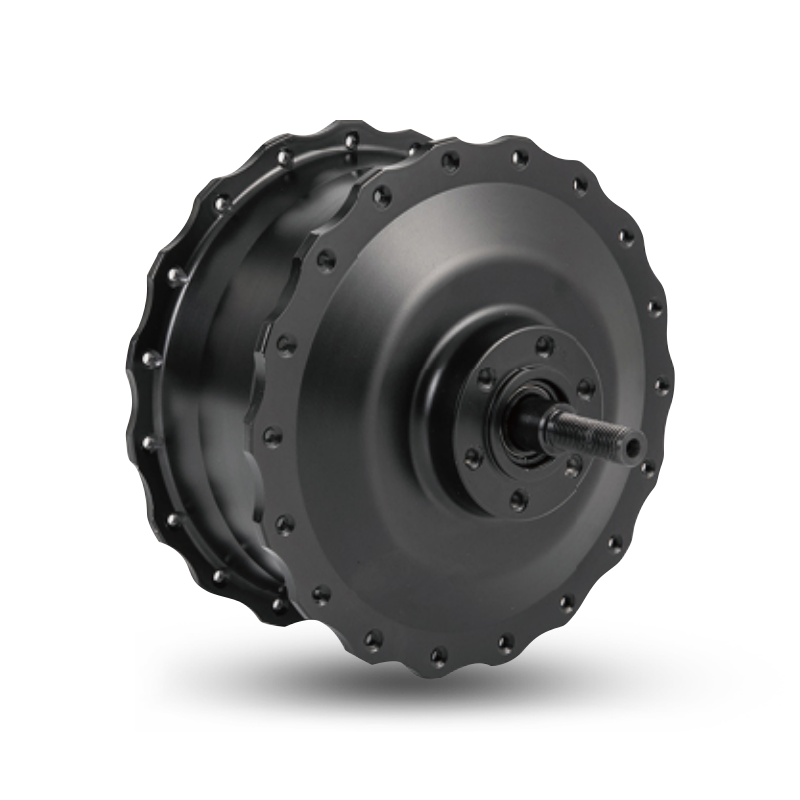 S-Type Pro F1500 Front Hub Motor
The S-Type Pro F1500 front hub motor, designed for E-Carao and E-Fat bikes, offe...
-
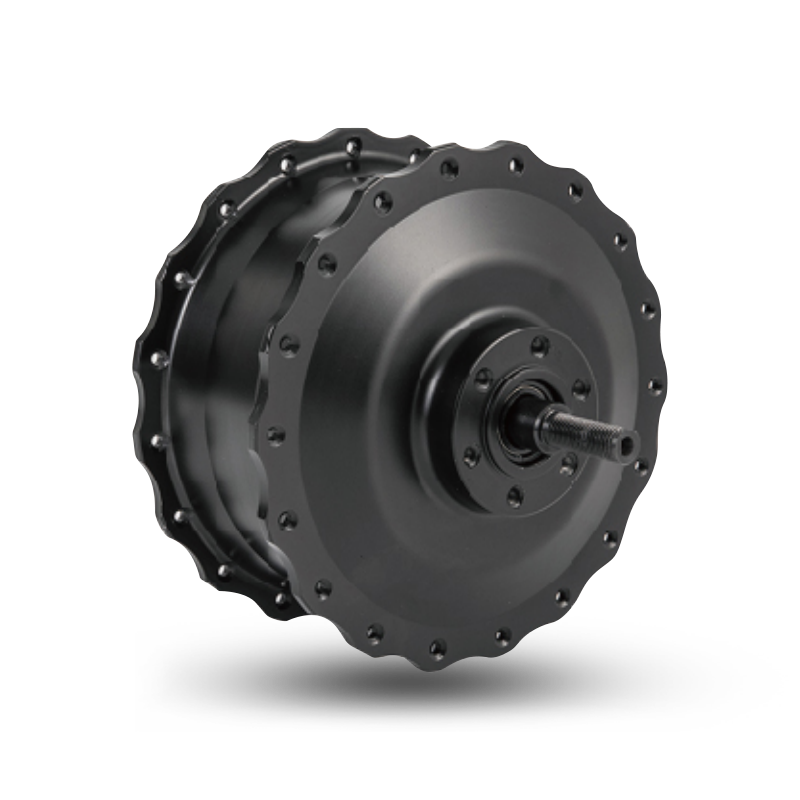 S-Type F750 Front Hub Motor
S-Type F750 is designed for E-Cargo and E-Fat. The rated power ranges from 500W ...
-
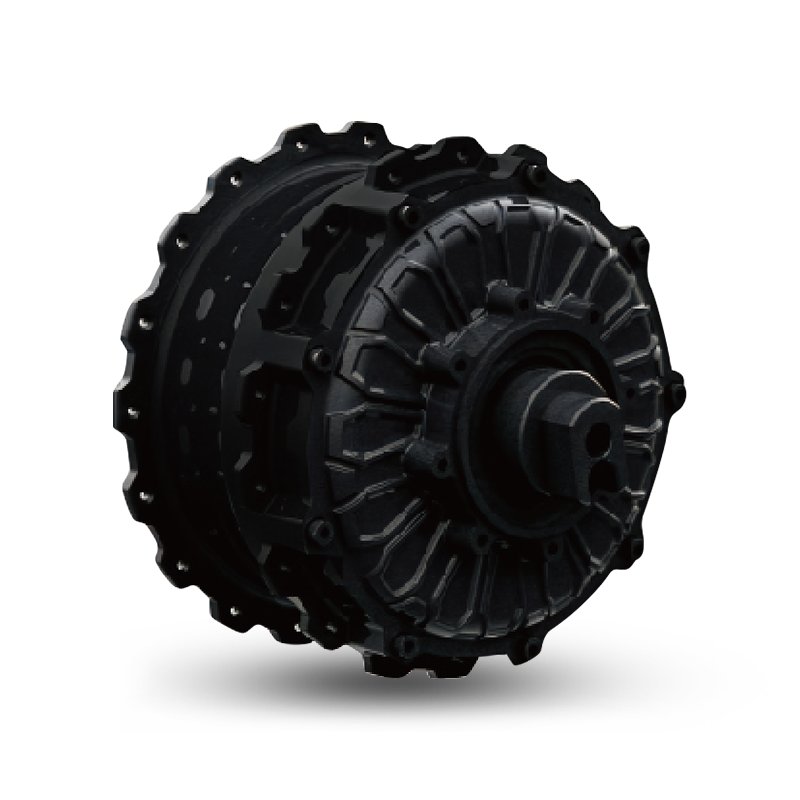 S-TYPE Max THRU AXLE Rear Hub Motor
The S-TYPE Max thru-axle motor is designed for E-Fat, Moped, and Cargo applicati...
-
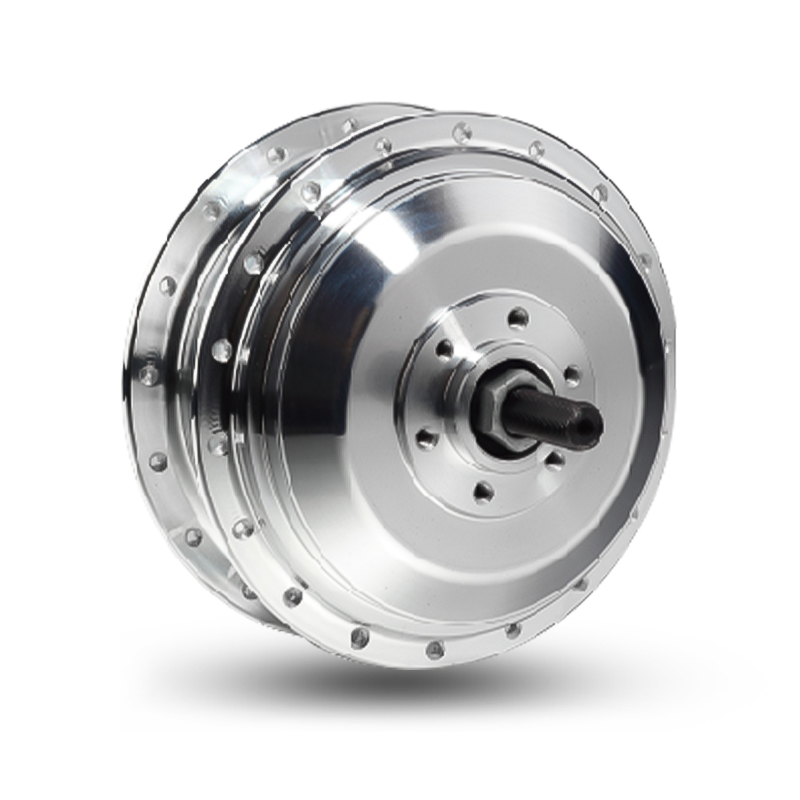 C-Type R350 Rear Hub Motor
The C-Type R350 Rear Hub Motor, designed for city e-bikes, offers a rated power ...
If you are interested in our products, please consult us
Contact Details
- Address:No. 3 Dingqiao Rd, Jiangshan Town, Yinzhou District, Ningbo, Zhejiang Province, China
- Phone: +86 13806662915
- Email: K.zhang@hengtai-cn.com
Products
Quick Link
News Center
Mobile terminal
