


 English
 中文简体
中文简体Don't hesitate to send a message
Plastic-Steel Gear Hub Motor: Differences & How to Choose
Content
- 1 What Are Planetary Gears in a Hub Motor and Why They Matter
- 2 Nylon (Plastic) Gears: Properties, Strengths, and Limitations
- 3 Steel (Metal) Gears: Properties, Strengths, and Limitations
- 4 Head-to-Head Comparison: Plastic vs. Steel Gear Hub Motors
- 5 Which Riding Scenarios Require Steel Gears vs. Nylon Gears
- 6 How to Identify Whether Your Hub Motor Has Plastic or Steel Gears
- 7 Replacing and Upgrading Hub Motor Gears: What You Need to Know
- 8 Maintenance Best Practices for Plastic-Steel Gear Hub Motors
- 9 Making the Final Decision: A Practical Selection Guide
A plastic-steel gear hub motor refers to a geared ebike hub motor whose internal planetary gear set uses a combination of — or a choice between — nylon (plastic) gears and metal (steel) gears. This distinction is not cosmetic: it directly determines the motor's torque capacity, noise level, durability under load, and maintenance requirements. Choosing the wrong gear material for your riding conditions is one of the most common causes of premature hub motor failure.
The direct answer: nylon gears are quieter and sufficient for light to moderate use (flat urban commuting, loads under 100 kg, moderate hills); steel gears are essential for sustained high-torque applications (steep hills, cargo loads above 120 kg, high-wattage builds, or frequent full-throttle use). Many manufacturers now offer the same motor model with a choice of gear material — making this a critical specification to verify before purchase.
What Are Planetary Gears in a Hub Motor and Why They Matter
Inside a geared hub motor, the internal brushless motor spins at high RPM — typically 3,000–5,000 RPM. This speed is far too fast to drive a bicycle wheel directly, so a planetary gear set steps the speed down to a usable wheel RPM (typically 200–700 RPM) while multiplying torque proportionally. The gear reduction ratio is usually between 4:1 and 5.5:1.
A planetary gear set consists of three elements: a central sun gear (driven by the motor shaft), planet gears that orbit the sun gear, and a ring gear (fixed to the hub shell). The planet gears are the highest-stress components in the system — they simultaneously mesh with both the sun gear and the ring gear, rotating continuously under load. The material and quality of these planet gears defines the durability ceiling of the entire motor.
Both nylon and steel versions of these gears are used in production hub motors. Neither is universally superior — each involves deliberate engineering trade-offs that favor different use cases.
Nylon (Plastic) Gears: Properties, Strengths, and Limitations
Nylon planet gears — often made from PA66 (Polyamide 66) or glass-fiber-reinforced nylon — are the standard in most 250W–500W ebike hub motors globally.
Why Manufacturers Choose Nylon Gears
- Low noise: Nylon has natural damping properties that absorb vibration and gear mesh noise. Motors with nylon gears run near-silently — typically under 50 dB at normal operating speeds — compared to 55–65 dB for equivalent steel-gear motors.
- Self-lubricating: Nylon generates less friction against steel ring gears and requires less lubrication maintenance. The grease life in nylon-geared motors is typically 3,000–5,000 km before regreasing is recommended.
- Shock absorption: Nylon flexes slightly under sudden load spikes, absorbing impact forces that could otherwise chip or crack rigid steel gear teeth. This makes nylon gears more tolerant of abrupt throttle engagement.
- Lower cost: Nylon gears are significantly cheaper to manufacture than precision-cut steel gears, keeping overall motor cost down.
- Light weight: Nylon planet gears contribute to the motor's low overall weight — a key advantage for ebike applications where unsprung weight affects handling.
Where Nylon Gears Fail
Nylon gears have a clear thermal and mechanical ceiling. Under sustained high torque — such as extended climbs, heavy cargo loads, or overvoltage builds — nylon planet gears heat up rapidly. Above approximately 120°C, PA66 nylon softens significantly, causing gear tooth deformation and accelerated wear. In extreme cases, gear teeth strip completely, leaving the motor unable to drive the wheel.
Real-world gear stripping incidents are commonly reported among riders who:
- Run a 250W-rated nylon-gear motor on a 48V battery with a high-current controller (effectively pushing 600W+).
- Climb steep grades (above 12–15%) at full throttle without pedaling, for 10+ minutes continuously.
- Carry total loads (rider + bike + cargo) above 130 kg on a motor rated for lighter use.
Nylon gear lifespan in typical urban commuting conditions ranges from 5,000 to 15,000 km. Under heavy or high-power use, this can drop to 1,000–3,000 km.
Steel (Metal) Gears: Properties, Strengths, and Limitations
Steel planet gears — typically made from sintered steel, hardened carbon steel, or powdered metal (PM) composites — are used in high-performance and heavy-duty geared hub motors.
Why High-Torque Builds Require Steel Gears
- Far higher torque capacity: Steel gears can sustain continuous mesh forces that would destroy nylon equivalents. A steel-gear motor can reliably deliver 60–100+ Nm continuously at the wheel, compared to 30–50 Nm for nylon gear motors under sustained load.
- Thermal stability: Steel does not soften or deform under motor operating temperatures. Even at 150–180°C internal temperatures, steel gear geometry remains stable, allowing the motor to continue operating where a nylon-gear motor would have already failed.
- Long service life under heavy use: In well-lubricated conditions, sintered steel planet gears can last 20,000–50,000 km even under demanding riding profiles — an order of magnitude better than nylon gears in the same conditions.
- Compatibility with high-current controllers: Steel-gear motors are designed to accept the high phase currents (30–50A) that high-torque builds require, without gear failure being the weak point in the system.
Trade-Offs of Steel Gears
- Noise: Steel-on-steel gear mesh produces a characteristic whine, typically 58–68 dB at operating speeds. The sound is not harmful but is clearly audible — a relevant factor for riders who prioritize a discreet or quiet motor.
- Lubrication requirements: Steel gears require higher-quality lubricants and more frequent inspection. Dry steel gears will wear rapidly. A regreasing interval of every 2,000–4,000 km or annually is typical for high-use steel-gear motors.
- Higher cost: Precision-cut or sintered steel planet gears add $30–$80 to the cost of the motor compared to nylon equivalents.
- Slightly higher weight: Steel gears add approximately 150–300 g to the motor assembly — negligible for cargo or performance builds, but a consideration for weight-sensitive applications.
Head-to-Head Comparison: Plastic vs. Steel Gear Hub Motors
| Criteria | Nylon (Plastic) Gears | Steel (Metal) Gears |
|---|---|---|
| Operating noise | Very quiet (~45–50 dB) | Audible whine (58–68 dB) |
| Sustained torque capacity | 30–50 Nm | 60–100+ Nm |
| Thermal resistance | Moderate (softens above ~120°C) | High (stable above 180°C) |
| Typical lifespan (heavy use) | 1,000–5,000 km | 20,000–50,000 km |
| Typical lifespan (light use) | 8,000–15,000 km | 30,000 km+ |
| Shock/impact tolerance | Good (flexes under load) | Moderate (teeth can chip if dry) |
| Lubrication needs | Low (every 3,000–5,000 km) | Higher (every 2,000–4,000 km) |
| Cost premium over nylon | Baseline | +$30–$80 per motor |
| Weight difference | Lighter (baseline) | +150–300 g |
| Recommended max wattage | Up to ~750W | 750W–2,000W+ |
Which Riding Scenarios Require Steel Gears vs. Nylon Gears
The decision between nylon and steel gears should be driven by your actual riding profile, not brand preference or price alone. The following breakdown provides a practical guide.
Nylon Gears Are Appropriate When:
- Total rider + bike weight is under 100 kg and terrain is predominantly flat to gently hilly (grades under 8%).
- The motor operates within its rated wattage — a 250W motor used at 250W, not pushed to 500W via a higher-voltage battery or controller.
- Quiet operation is a priority (e.g., early morning commuting, noise-sensitive environments, or riders who dislike motor noise).
- The bike is used primarily for leisure or short daily commutes of under 20 km per day without frequent full-throttle use.
- Budget is a primary constraint and the rider is comfortable replacing gears as a periodic maintenance item.
Steel Gears Are Necessary When:
- Total load exceeds 120 kg, or cargo bikes are involved where the motor regularly operates near or above rated load.
- Hills steeper than 12–15% are part of the regular route, especially if the motor is expected to climb without significant pedal input.
- The motor is paired with a high-current controller (above 20A phase current) or run on a voltage above its nominal rating (e.g., a 36V-rated motor on 48V).
- The ebike is used for commercial purposes — delivery, rental fleets, or frequent daily long-distance rides where downtime for gear replacement is unacceptable.
- Off-road or trail riding where frequent abrupt torque demands occur (rock gardens, root sections, soft terrain requiring full-power traction).
How to Identify Whether Your Hub Motor Has Plastic or Steel Gears
Identifying the gear material of an existing or prospective motor is straightforward using the following methods:
- Listen at startup: Nylon-gear motors are nearly silent under light load. Steel-gear motors produce a clear, consistent mechanical whine that is audible from several meters away. A quick 5-second test ride reveals gear type with reasonable confidence.
- Open the motor side cover: Most geared hub motors can be opened by removing 3–6 screws on the non-freewheel side cover. The planet gears are immediately visible. Nylon gears are typically beige, white, or black in color; steel sintered gears appear metallic gray with a dull or powdered finish.
- Contact the supplier directly: When purchasing from manufacturers or distributors, ask specifically: "Are the planet gears nylon or sintered metal?" This question eliminates ambiguity from vague product descriptions like "high-strength gears" or "upgraded internals."
- Check community forums: For popular motor models , user communities on Endless Sphere and Reddit's r/ebikes maintain detailed documentation of which hardware revision uses which gear material.
Replacing and Upgrading Hub Motor Gears: What You Need to Know
One of the practical advantages of geared hub motors is that the planetary gears are a replaceable wear item. Gear replacement does not require a new motor — it requires opening the hub, removing the worn planet gears, and installing new ones. This makes gear material selection less of a permanent decision and more of a maintenance strategy.
Upgrade Path: Nylon to Steel
These kits — priced at approximately $15–$45 — include the steel planet gears and a new sun gear matched to the motor's internal geometry. Installation requires basic mechanical skill, a gear puller, and fresh grease. The upgrade is reversible and is commonly performed by riders who initially purchased a nylon-gear motor and later upgraded their controller or battery to a higher power level.
Important Compatibility Notes
- Not all steel gear kits are cross-compatible between motor brands. Verify the gear module (tooth pitch) and planet gear count match your specific motor before ordering.
- When switching to steel gears, replace the ring gear simultaneously if it was originally designed for nylon gears. Nylon-optimized ring gears may wear faster against steel planet gears.
- Use a high-quality lithium grease or synthetic gear grease rated for metal-on-metal contact when reassembling. Do not reuse the factory nylon-gear grease, which may not have adequate extreme-pressure (EP) additives for steel gears.
- After reassembly, run the motor gently for the first 50–100 km to allow the new steel gears to seat properly before applying full load.
Maintenance Best Practices for Plastic-Steel Gear Hub Motors
Whether your hub motor uses nylon or steel gears, correct maintenance practice significantly extends gear and motor life. The following protocols apply to both gear types, with noted differences where applicable.
- Inspect and regrease on schedule: Nylon gears every 3,000–5,000 km; steel gears every 2,000–4,000 km. Open the non-drive side cover, clean out old grease with a lint-free cloth, and apply fresh grease. Do not overfill — excess grease can work into the motor windings.
- Use the correct grease: For nylon gears, a standard NLGI Grade 2 lithium grease is appropriate. For steel gears, choose a grease with extreme pressure (EP) additives. Avoid petroleum-based solvents near nylon gears, as they can cause brittleness over time.
- Avoid sustained full-load climbing: Regardless of gear type, climbing steep grades at full throttle without pedaling is the single fastest way to overheat a hub motor. Contribute meaningful pedal effort on climbs above 10% grade to share the thermal load.
- Monitor for early warning sounds: A new grinding, clicking, or roughness in the motor sound indicates gear wear or a lubrication deficit. Address it promptly — running on degraded gears accelerates damage to the ring gear and motor housing.
- Keep water ingress minimized: Most hub motors carry an IP54 or IP65 rating, but sustained water exposure (e.g., riding in heavy rain daily) can degrade grease and, in nylon gear motors, cause plastic swelling from moisture absorption. Dry the motor and inspect grease condition after extended wet riding.
- Stock replacement gears: For regular commuters or commercial riders, keeping a spare gear set on hand eliminates downtime. A full planetary gear kit for most common motors costs $10–$45 and takes 30–60 minutes to install with basic tools.
Making the Final Decision: A Practical Selection Guide
The following decision framework distills the key considerations into a practical guide for buyers evaluating plastic-steel gear hub motor options.
| Rider Profile | Recommended Gear Type |
|---|---|
| Light urban commuter, flat terrain, under 90 kg total | Nylon |
| Hilly commuter, 100–120 kg total, 250W–500W | Nylon (with care) or Steel |
| Heavy rider or light cargo, 120–150 kg total | Steel |
| Performance build, 500W–1,500W, high-current controller | Steel (mandatory) |
| Cargo delivery bike, 150–250 kg total load | Steel (mandatory) |
| Quiet priority, leisure, noise-sensitive environment | Nylon |
When in doubt, choose steel gears. The noise penalty is real but manageable; the durability gain under any unexpected loading is significant. For a motor expected to last 3–5 years in daily use, the additional cost of steel gears — typically $30–$60 — represents a negligible fraction of the total system cost and avoids the inconvenience of gear failure mid-commute.
OUR PRODUCTS
Recommended Products
-
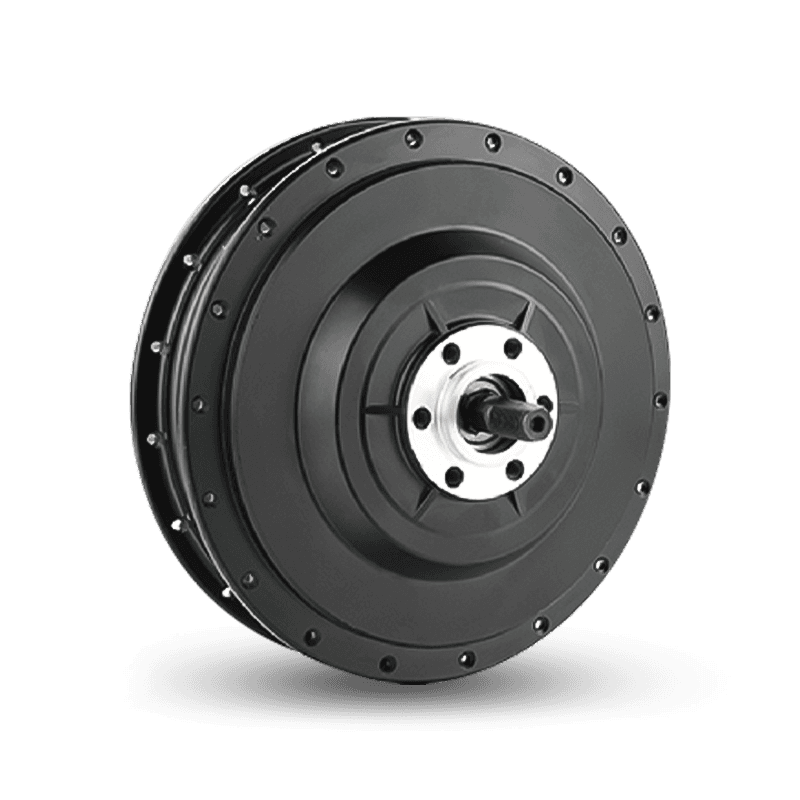 E-Type F500 Front Hub Motor
The E-Type F500 front hub motor is designed for E-Cargo and E-MTB bikes, offerin...
-
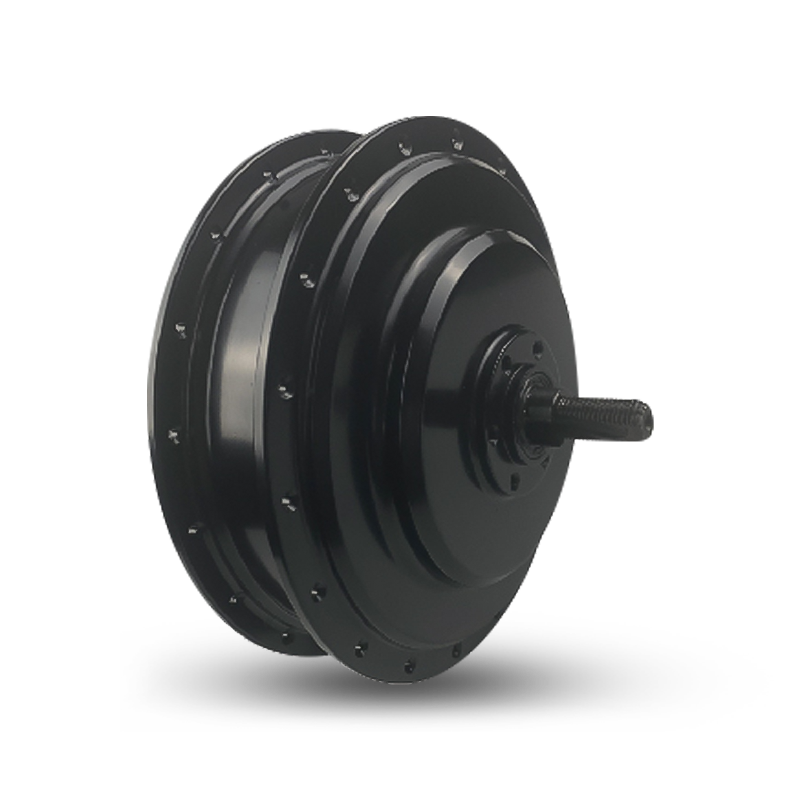 E-Type Pro RC750 Rear Hub Motor
The E-Type Pro RC750 Rear Hub Motor is designed for E-Cargo and E-MTB bikes, com...
-
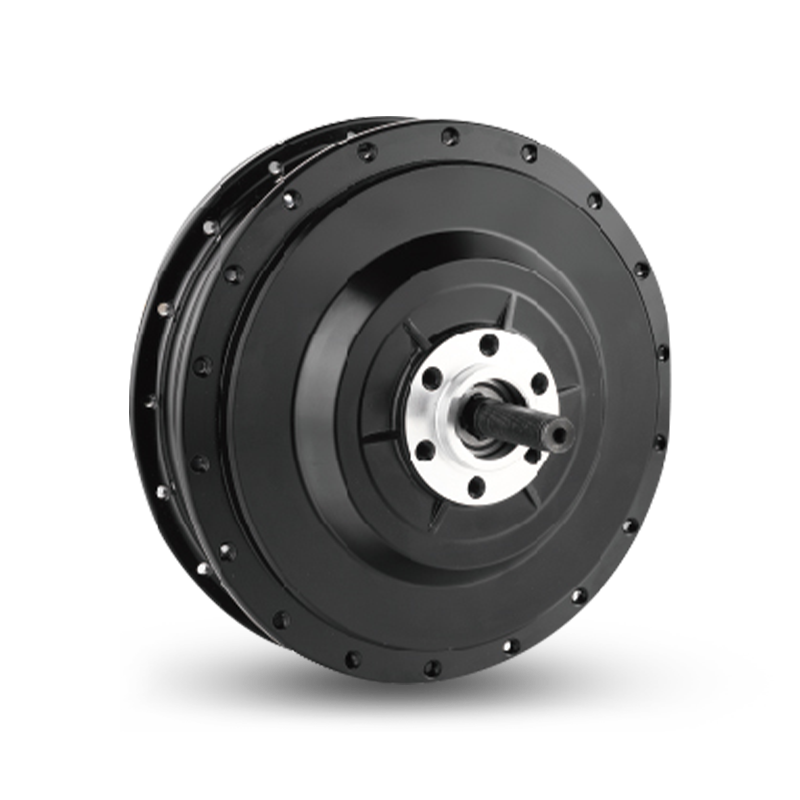 E-Type RF500 Rear Hub Motor
The E-Type RF500 Rear Hub Motor is designed for E-Cargo and E-MTB bikes, compati...
-
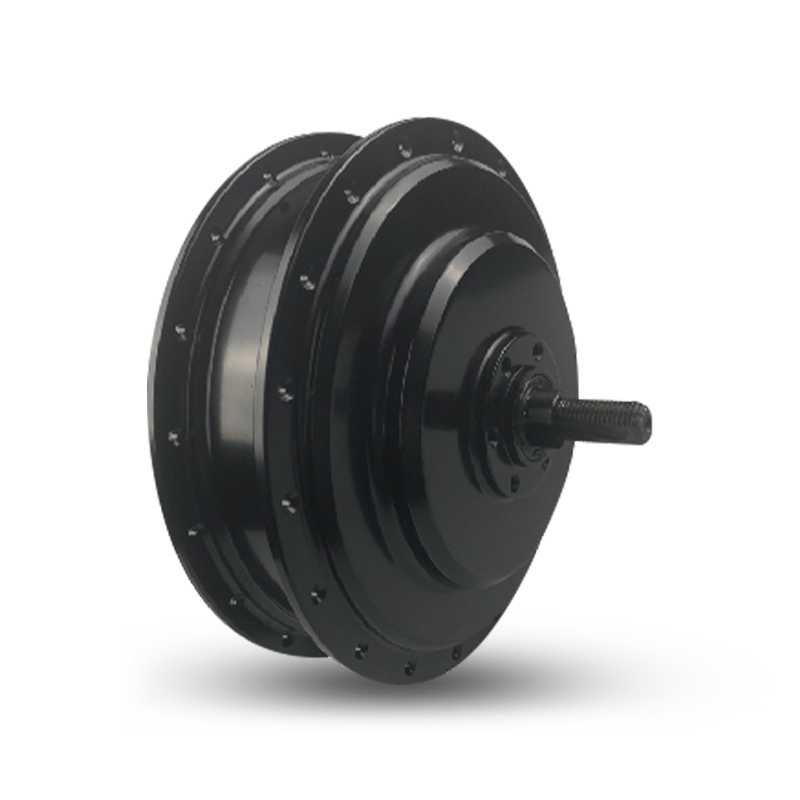 E-Type Pro RF750 Rear Hub Motor
The E-Type Pro RF750 Rear Hub Motor is designed for E-Cargo and E-MTB bikes, com...
-
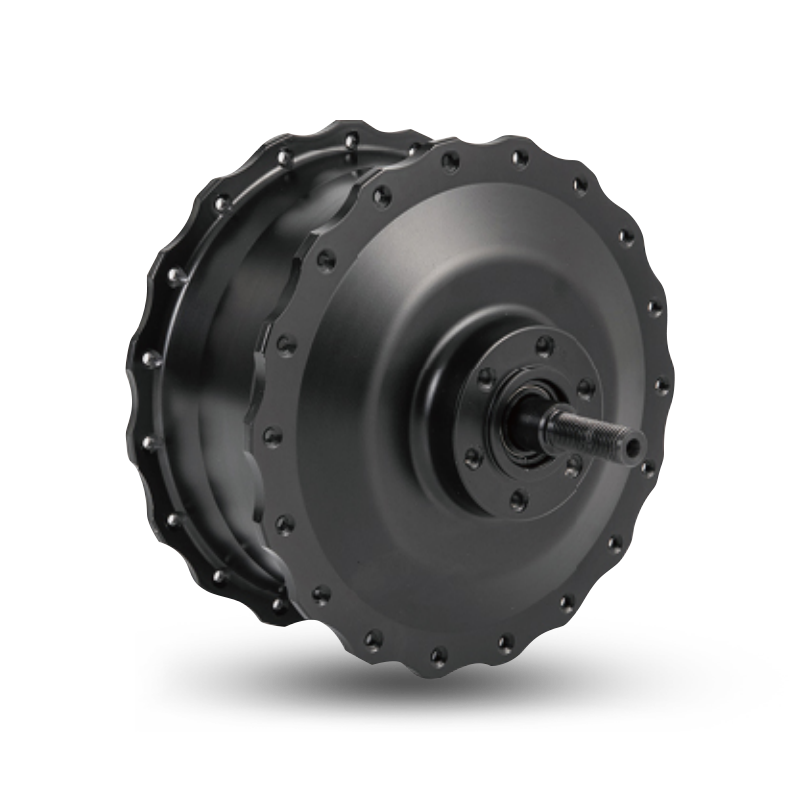 S-Type Pro F1500 Front Hub Motor
The S-Type Pro F1500 front hub motor, designed for E-Carao and E-Fat bikes, offe...
-
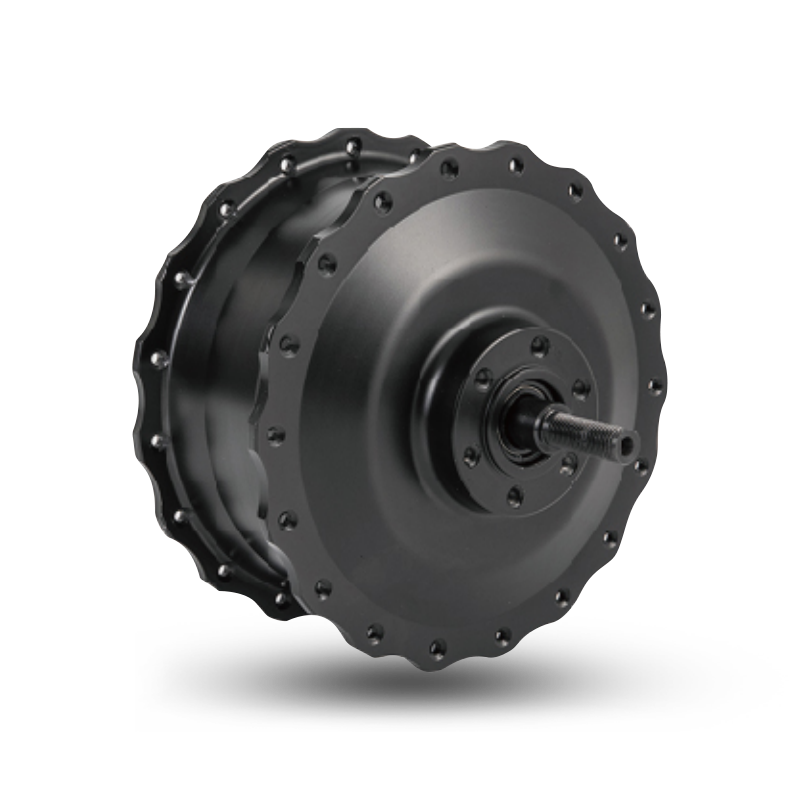 S-Type F750 Front Hub Motor
S-Type F750 is designed for E-Cargo and E-Fat. The rated power ranges from 500W ...
-
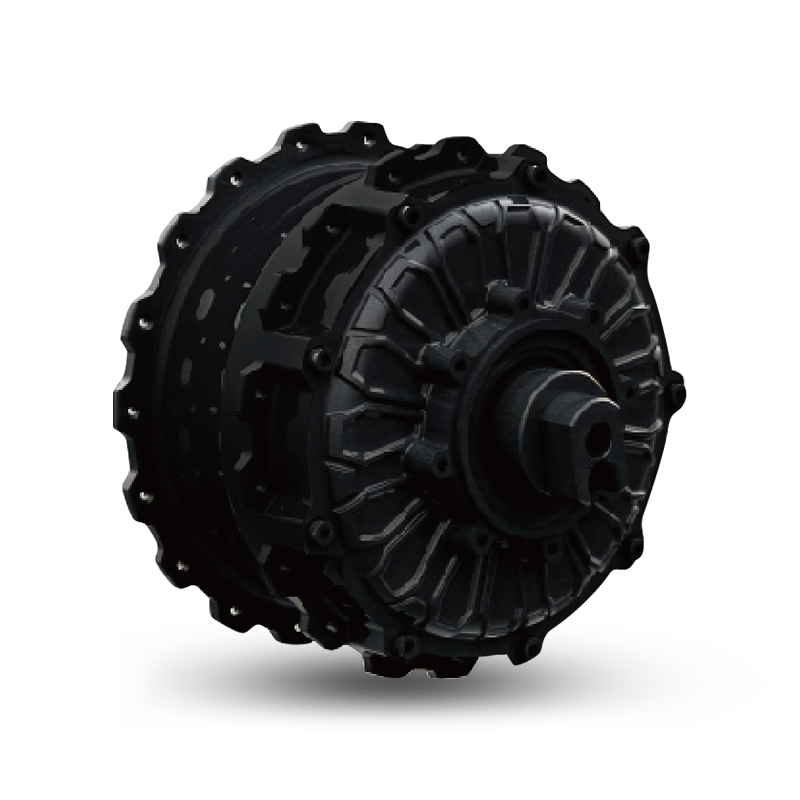 S-TYPE Max THRU AXLE Rear Hub Motor
The S-TYPE Max thru-axle motor is designed for E-Fat, Moped, and Cargo applicati...
-
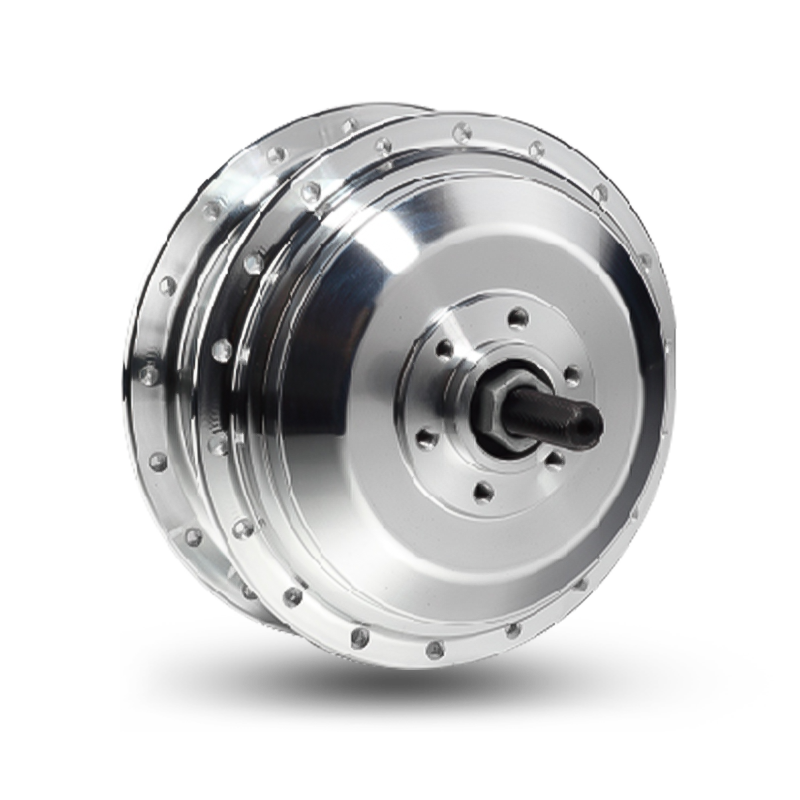 C-Type R350 Rear Hub Motor
The C-Type R350 Rear Hub Motor, designed for city e-bikes, offers a rated power ...
If you are interested in our products, please consult us
Contact Details
- Address:No. 3 Dingqiao Rd, Jiangshan Town, Yinzhou District, Ningbo, Zhejiang Province, China
- Phone: +86 13806662915
- Email: K.zhang@hengtai-cn.com
Products
Quick Link
News Center
Mobile terminal
