


 English
 中文简体
中文简体Don't hesitate to send a message
How Does a Hub Motor Work? Complete Guide
Content
- 1 Core Components Inside a Hub Motor
- 2 How the Electromagnetic Principle Generates Motion
- 3 Direct Drive vs. Geared Hub Motors: Key Differences
- 4 Front Hub vs. Rear Hub Motor Placement
- 5 How Hub Motors Handle Regenerative Braking
- 6 Power, Torque, and Efficiency: Real Numbers
- 7 Hub Motor vs. Mid-Drive Motor: Which Works Better?
- 8 Common Hub Motor Problems and What Causes Them
- 9 Applications Beyond E-Bikes
A hub motor works by integrating an electric motor directly into the wheel hub, using electromagnetic force between a stator (fixed coils) and a rotor (permanent magnets) to spin the wheel without any chain, belt, or external drivetrain. When electric current flows through the stator windings, it creates a rotating magnetic field that pushes against the rotor magnets, generating torque that directly drives the wheel. This self-contained design makes hub motors the foundation of most e-bikes, electric scooters, and light electric vehicles on the market today.
Core Components Inside a Hub Motor
Understanding the internal structure reveals why hub motors are both efficient and compact. Every hub motor contains the same fundamental parts, though their arrangement varies by type.
Stator
The stator is the stationary core mounted on the axle. It consists of laminated steel teeth wound with copper coils (windings). These coils are energized in sequence by a motor controller, producing a rotating magnetic field. A typical e-bike hub motor stator has 27 to 36 coil poles.
Rotor / Shell
The rotor surrounds the stator and is attached to the outer wheel shell. It carries an array of permanent magnets (typically neodymium) arranged around the inner circumference. The interaction between the stator's electromagnetic field and the rotor's permanent magnets produces rotation. Most hub motors use 46 to 52 magnet poles.
Hall Effect Sensors
Three Hall sensors detect the rotor's exact angular position in real time. They send position signals to the controller, which uses this data to fire the correct coil windings at the right moment — ensuring smooth, efficient torque delivery at any speed.
Motor Controller
The controller is the brain of the system. It converts DC battery power into precisely timed three-phase AC pulses delivered to the stator windings. Modern controllers use Field-Oriented Control (FOC), which improves efficiency by up to 15% compared to older square-wave controllers and significantly reduces motor noise.
How the Electromagnetic Principle Generates Motion
Hub motors operate on the principle of the Lorentz force: a current-carrying conductor in a magnetic field experiences a force perpendicular to both the current and the field. Here is the step-by-step sequence:
- The battery sends DC voltage to the motor controller.
- The controller converts DC into three-phase AC and delivers it to the stator coils in a timed sequence.
- The energized coils generate a rotating magnetic field.
- The rotating field attracts and repels the permanent magnets on the rotor, pushing it to rotate.
- The rotor is mechanically connected to the wheel shell, so the wheel turns.
- Hall sensors continuously report rotor position back to the controller, closing the feedback loop.
This entire cycle repeats thousands of times per minute. At a typical e-bike cruising speed of 25 km/h with a 26-inch wheel, the hub motor completes roughly 200 to 250 electrical cycles per second.
Direct Drive vs. Geared Hub Motors: Key Differences
Hub motors come in two major configurations. Each suits different riding conditions, and choosing the wrong type significantly affects performance.
| Feature | Direct Drive Hub Motor | Geared Hub Motor |
|---|---|---|
| Gear mechanism | None — rotor directly turns wheel | Planetary gearbox (3:1 to 5:1 ratio) |
| Weight | Heavier (3–6 kg typical) | Lighter (2–3.5 kg typical) |
| Regenerative braking | Yes — effective regen possible | Limited or none (freewheeling clutch) |
| Low-speed torque | Moderate | High (gearing multiplies torque) |
| High-speed efficiency | High (no gear friction losses) | Moderate |
| Durability | Very high (no moving parts to wear) | Good (nylon gears wear over ~20,000 km) |
| Best use case | Flat terrain, cargo e-bikes, speed pedelecs | Hilly terrain, lightweight commuter e-bikes |
Front Hub vs. Rear Hub Motor Placement
Placement affects handling, traction, and feel in ways that matter in real-world riding conditions.
Front Hub Motor
- Simple to install — no interference with rear derailleur or cassette.
- Provides a front-wheel-drive feel, which can cause wheel spin on loose surfaces.
- Adds weight to the front fork — not ideal for bikes with carbon or thin aluminum forks (torque arm required above 500W).
- Lower cost conversion option; common on budget conversion kits (250W–500W range).
Rear Hub Motor
- Better traction — rear-wheel drive matches how most conventional bikes handle.
- Weight bias toward the rear improves stability at speed.
- More complex to remove for flat repairs (especially with internal gearing).
- Used in the vast majority of production e-bikes — models like the Rad Power RadRover and Specialized Turbo Como both use rear hub motors.
How Hub Motors Handle Regenerative Braking
Direct drive hub motors can function as generators when the wheel spins faster than the motor's powered speed — a state called back-EMF (back electromotive force). During braking or downhill riding, the controller switches the motor into generator mode, converting kinetic energy back into battery charge.
In practice, regenerative braking on e-bikes recovers 5% to 10% of total energy in typical urban commuting scenarios. On long descents, recovery can reach 15%. This is modest compared to electric cars (which recover 20–30%) because e-bikes have lower mass and slower speeds. However, regen does extend range meaningfully in stop-and-go city traffic.
Geared hub motors cannot regenerate effectively because their internal one-way clutch (freewheel mechanism) disconnects the motor from the wheel during coasting — which is also why geared motors spin freely and create no drag when unpowered.
Power, Torque, and Efficiency: Real Numbers
Hub motor performance is defined by three interdependent specifications. Understanding these helps when comparing motors or diagnosing poor performance.
- Rated power vs. peak power: A "250W" hub motor typically has a peak power of 500W to 750W. Rated power is the sustained output before overheating, not the maximum burst.
- Torque: Common e-bike hub motors produce 40 Nm to 80 Nm.
- Efficiency: Well-designed hub motors achieve 85% to 92% efficiency at optimal load. At very low speeds or very high loads, efficiency drops to 60–70% due to copper losses in the windings.
- Kv rating: The motor's RPM-per-volt constant. A lower Kv (e.g., 6–10 Kv) means higher torque at lower RPM — ideal for direct drive. A higher Kv (e.g., 15–25 Kv) suits geared motors running at higher internal RPM.
Hub Motor vs. Mid-Drive Motor: Which Works Better?
Hub motors and mid-drive motors are the two dominant architectures in e-bikes. They suit fundamentally different use cases.
| Criteria | Hub Motor | Mid-Drive Motor |
|---|---|---|
| Drivetrain interaction | Independent of chain/gears | Works through the chain and cassette |
| Hill climbing | Moderate (fixed gear ratio) | Excellent (uses bike gears) |
| Maintenance | Low — sealed unit, no chain strain | Higher — chain and cassette wear faster |
| Weight distribution | Weight at wheel — affects handling | Centralized — better balance |
| Cost | Lower (simpler to manufacture) | Higher |
| Flat terrain efficiency | High | Comparable |
For flat urban commuting and cargo bikes, hub motors are typically the better value. For off-road riding, steep hills, and technical terrain, mid-drive systems offer a meaningful performance advantage.
Common Hub Motor Problems and What Causes Them
Hub motors are reliable, but specific failure patterns do occur. Knowing the root causes helps with diagnosis and prevention.
Overheating
Sustained high-load climbing causes heat buildup in the stator windings. Motor temperature above 120°C degrades winding insulation and can demagnetize the rotor magnets. Direct drive motors are more vulnerable than geared motors on long climbs because they cannot spin at a more efficient RPM. Thermal cutoff controllers help, but the real fix is selecting an appropriately rated motor for your terrain.
Hall Sensor Failure
Symptoms include jerky startup, grinding, or a motor that only works in one direction. Hall sensors are inexpensive (under $5 each) and can be replaced, but require opening the motor hub — a task most users send to a bike shop.
Axle Dropout Damage
High-torque motors can spin in the dropout slot if not properly secured — a dangerous failure mode. Torque arms are mandatory for motors above 500W mounted in standard aluminum dropouts. Steel dropouts on older frames handle torque better but still benefit from a torque arm on motors above 1000W.
Gear Wear (Geared Motors Only)
The nylon planetary gears in geared hub motors typically last 15,000 to 25,000 km before needing replacement. Symptoms are a rattling sound or slipping under load. Replacement gear sets for popular motors cost $10–$25 and are a DIY-friendly repair.
Applications Beyond E-Bikes
Hub motor technology scales from small personal devices to heavy industrial applications. The same electromagnetic principles apply across all these uses:
- Electric scooters: Most shared and personal scooters use 250W–350W geared rear hub motors.
- Electric wheelchairs: Dual hub motors in each rear wheel provide precise independent speed control for turning.
- Electric motorcycles: High-power direct drive hub motors (5kW–20kW) eliminate the need for a transmission entirely.
- Industrial AGVs: Automated guided vehicles in warehouses use hub motors for compact, low-maintenance wheel drive units.
OUR PRODUCTS
Recommended Products
-
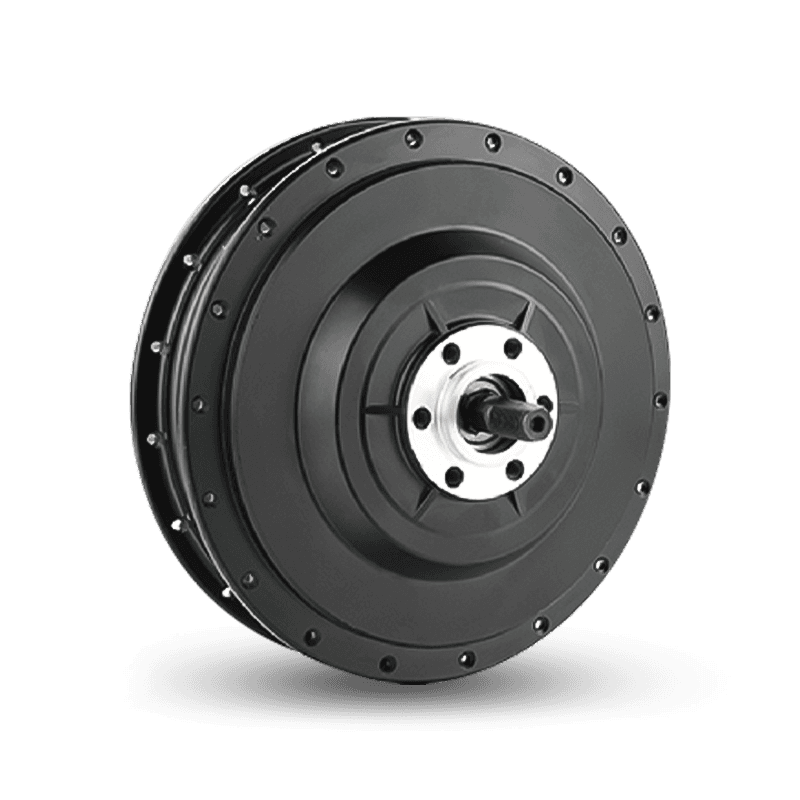 E-Type F500 Front Hub Motor
The E-Type F500 front hub motor is designed for E-Cargo and E-MTB bikes, offerin...
-
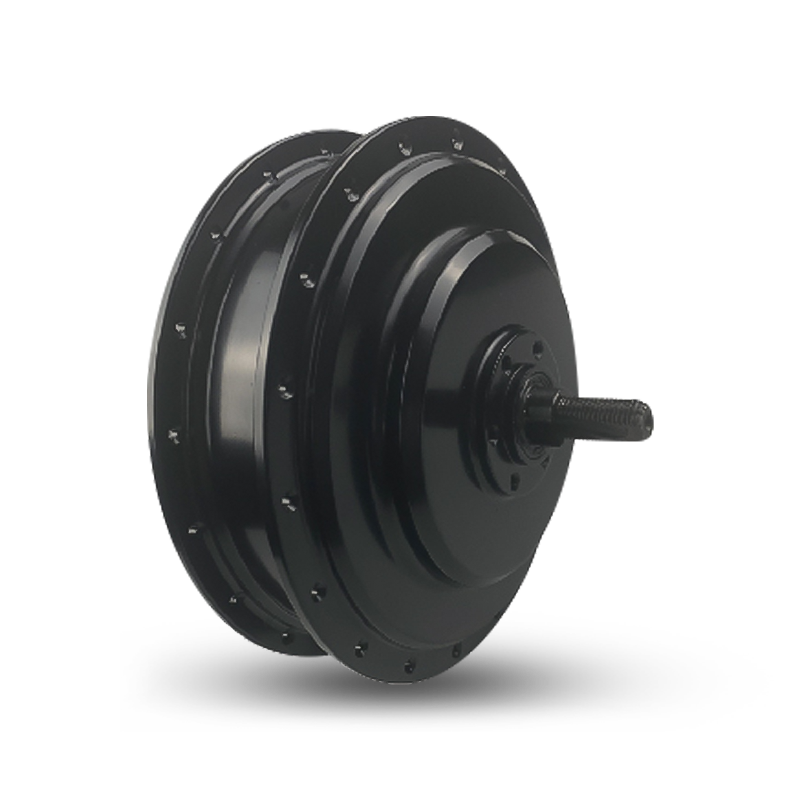 E-Type Pro RC750 Rear Hub Motor
The E-Type Pro RC750 Rear Hub Motor is designed for E-Cargo and E-MTB bikes, com...
-
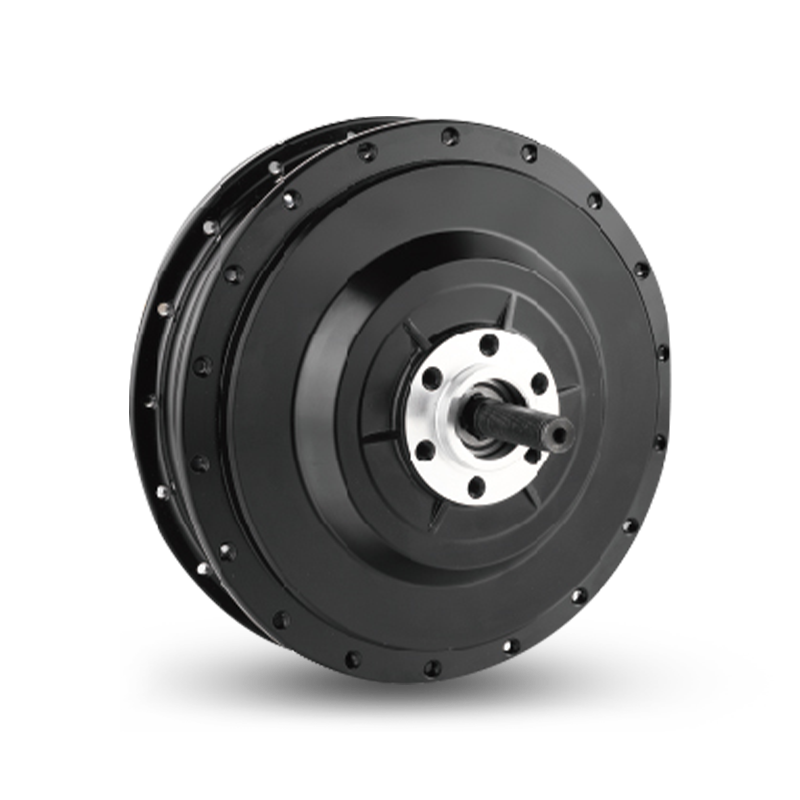 E-Type RF500 Rear Hub Motor
The E-Type RF500 Rear Hub Motor is designed for E-Cargo and E-MTB bikes, compati...
-
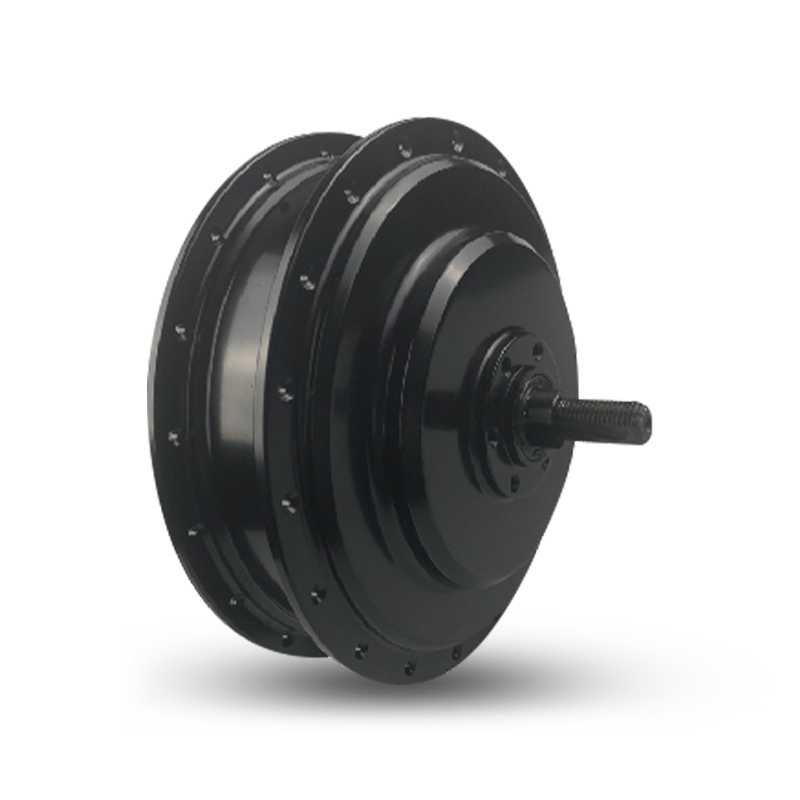 E-Type Pro RF750 Rear Hub Motor
The E-Type Pro RF750 Rear Hub Motor is designed for E-Cargo and E-MTB bikes, com...
-
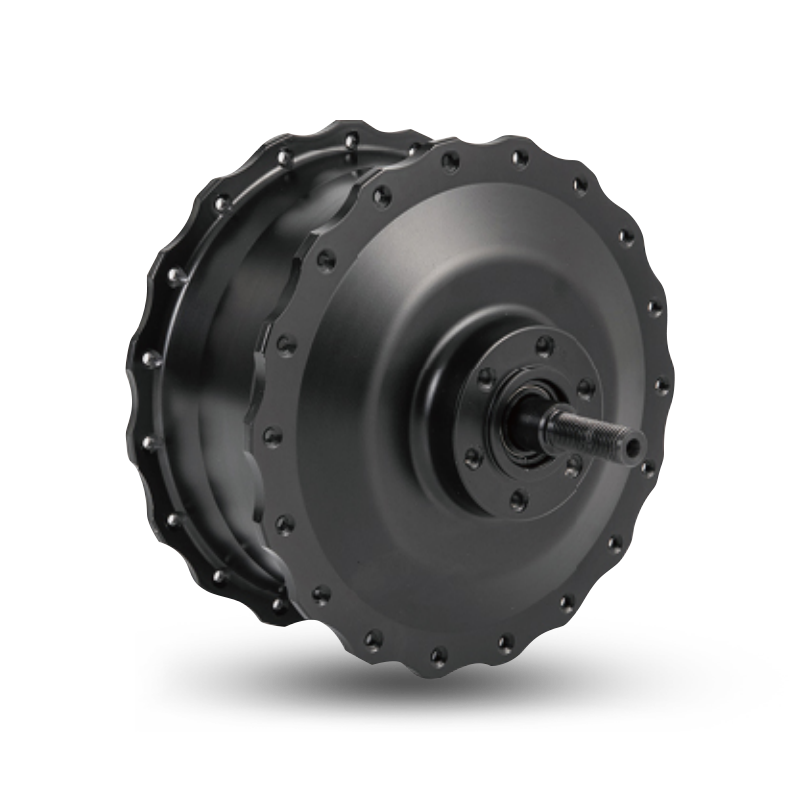 S-Type Pro F1500 Front Hub Motor
The S-Type Pro F1500 front hub motor, designed for E-Carao and E-Fat bikes, offe...
-
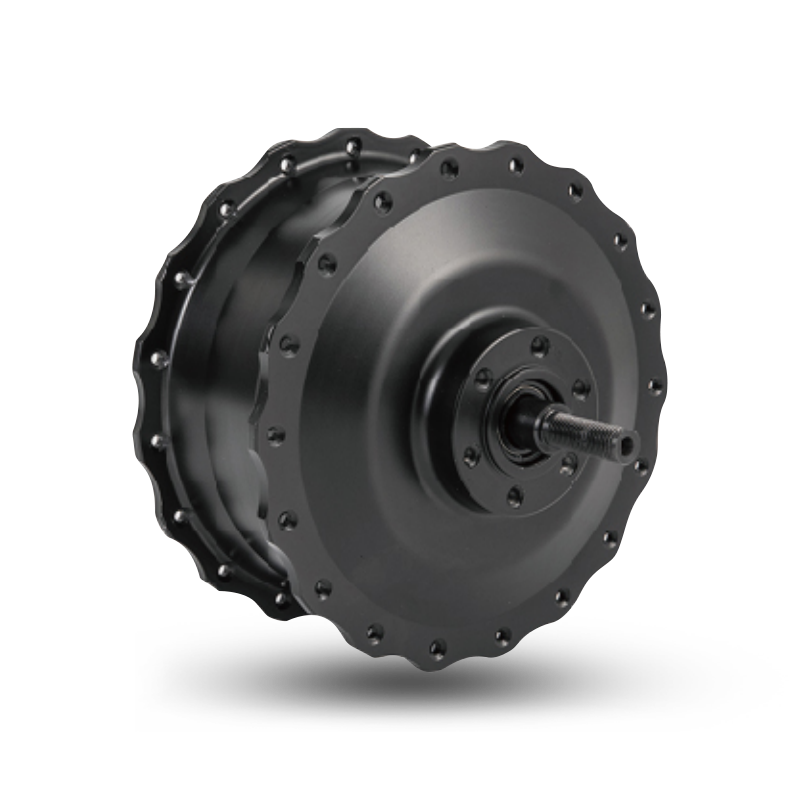 S-Type F750 Front Hub Motor
S-Type F750 is designed for E-Cargo and E-Fat. The rated power ranges from 500W ...
-
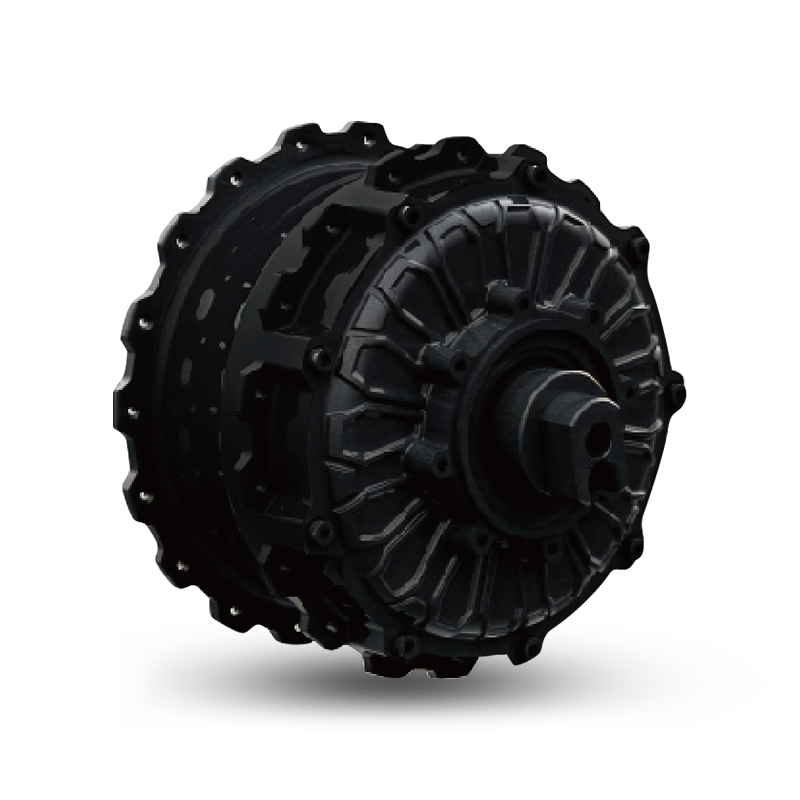 S-TYPE Max THRU AXLE Rear Hub Motor
The S-TYPE Max thru-axle motor is designed for E-Fat, Moped, and Cargo applicati...
-
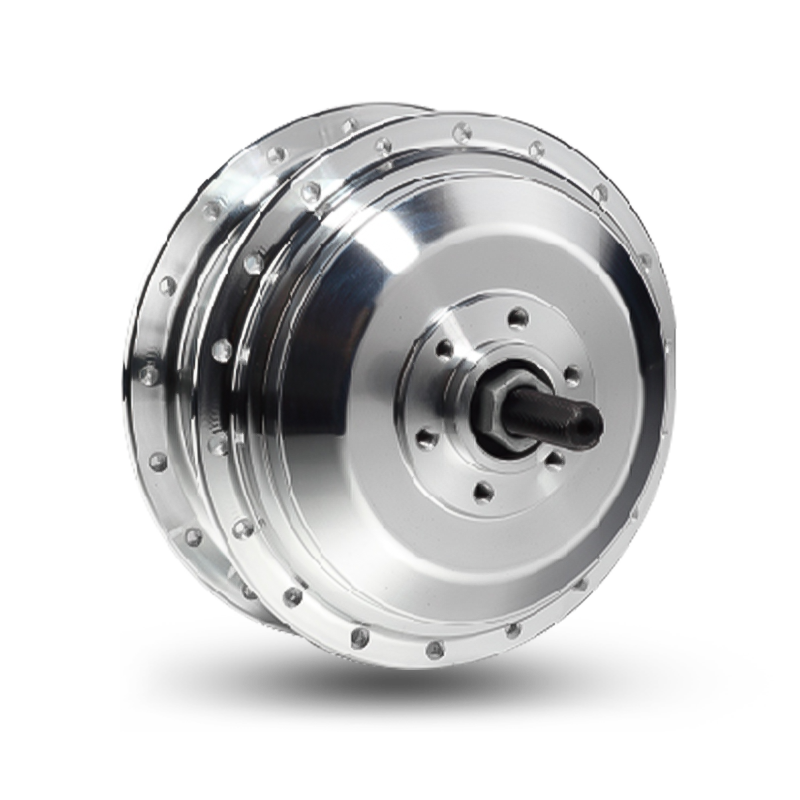 C-Type R350 Rear Hub Motor
The C-Type R350 Rear Hub Motor, designed for city e-bikes, offers a rated power ...
If you are interested in our products, please consult us
Contact Details
- Address:No. 3 Dingqiao Rd, Jiangshan Town, Yinzhou District, Ningbo, Zhejiang Province, China
- Phone: +86 13806662915
- Email: K.zhang@hengtai-cn.com
Products
Quick Link
News Center
Mobile terminal
