


 English
 中文简体
中文简体Don't hesitate to send a message
E-Cargo Bike Composite Gear Hub Motor: Full Guide
Content
- 1 Why Cargo Ebikes Demand Purpose-Built Gear Hub Motors
- 2 What "Composite Gear" Actually Means in Hub Motor Engineering
- 3 Composite Gear Hub Motor vs. Other Motor Types for E-Cargo Bikes
- 4 Torque Requirements for E-Cargo Bike Applications by Load Profile
- 5 Key Motor Specifications to Evaluate for E-Cargo Hub Motor Selection
An e-cargo bike composite gear hub motor is a geared hub motor designed for electric cargo bicycles that uses a composite planetary gear set — typically combining a hardened steel ring gear with nylon, fiber-reinforced polymer, or sintered metal planet gears — to balance torque capacity, noise reduction, and service durability under sustained heavy loads. For cargo ebike operators, this gear architecture is not a minor technical detail: it directly determines whether the motor survives daily commercial use carrying 100–250 kg of combined load or fails prematurely through gear stripping, overheating, or drivetrain wear.
The direct conclusion: composite gear hub motors are the engineered middle ground between all-nylon gear motors (quiet but fragile under heavy load) and all-steel gear motors (durable but loud and heavy). For e-cargo bikes operating in urban delivery, family transport, or commercial fleet applications, composite gear configurations — particularly those pairing glass-fiber-reinforced polymer planet gears with steel ring gears — offer the best combination of acceptable noise, gear longevity, weight, and sustained torque output for the majority of cargo use cases. This guide explains the engineering behind these motors, what performance they deliver, and how to choose the right configuration for your specific cargo application.
Why Cargo Ebikes Demand Purpose-Built Gear Hub Motors
Electric cargo bikes impose fundamentally different mechanical demands on hub motors compared to standard commuter or recreational ebikes. Understanding these demands explains why gear material and motor architecture matter far more in the cargo context.
Load Multiplication Effect on Gear Stress
A standard commuter ebike carries a total system weight of approximately 90–110 kg (rider + bike). A typical e-cargo bike carries 150–300 kg total — including the bike frame (often 25–40 kg), rider (70–90 kg), and cargo payload (50–200 kg depending on configuration). This weight increase does not scale linearly with motor stress: at the same motor power, a doubling of total load more than doubles the torque demand on the planet gears due to the additional rolling resistance, inertia, and gradient force involved. Gear sets not designed for this load profile fail in months rather than years.
Duty Cycle: Continuous Operation vs. Recreational Use
A commuter ebike motor runs for 30–60 minutes per day in a typical use case. A commercial delivery e-cargo bike operates for 6–10 hours per day, often with frequent stop-and-go cycles that generate peak torque demand every time the loaded bike accelerates from rest. This duty cycle creates cumulative heat and mechanical stress that standard geared hub motors — even high-quality ones — are not designed to sustain. Composite gear materials with better thermal stability and fatigue resistance are specifically chosen to handle this operating profile.
Urban Gradient and Surface Variability
Cargo ebikes regularly navigate urban environments with cobblestones, kerb drops, bridge inclines, and loading ramp gradients of 8–20% — often while carrying maximum payload. Each hill climb under full load demands sustained high torque from the motor. If the gear material cannot sustain this thermal and mechanical load over thousands of daily cycles, the result is progressive gear tooth wear leading to total gear failure, typically manifesting first as slippage or clicking under load.
What "Composite Gear" Actually Means in Hub Motor Engineering
The term "composite gear" in hub motor engineering refers to planetary gear sets that use more than one material in combination, rather than a single uniform material throughout. This is distinct from all-nylon or all-steel configurations. The specific composite configurations found in e-cargo hub motors include:
Glass-Fiber-Reinforced Nylon Planet Gears + Steel Ring Gear
The most common composite configuration in mid-to-high-performance cargo hub motors. The planet gears are molded from PA66-GF30 (Polyamide 66 with 30% glass fiber reinforcement) — a material with approximately 2–3 times the tensile strength and significantly better thermal stability than unfilled PA66 nylon. The ring gear remains steel, providing a hard, dimensionally stable mesh surface. This combination produces:
- Continuous operating temperature tolerance up to 150–160°C (vs. ~120°C for unfilled nylon).
- Sustained torque capacity approximately 40–60% higher than unfilled nylon gear equivalents.
- Noise levels 5–10 dB lower than equivalent all-steel gear configurations — a meaningful difference in urban delivery contexts where motor noise affects operator and pedestrian experience.
- Shock absorption properties retained from the polymer base, reducing sudden load spike damage.
Sintered Metal (Powdered Metal) Planet Gears + Steel Ring Gear
Used in the highest-performance cargo hub motors. Sintered metal gears are pressed and heat-treated from metal powder, producing a porous structure that retains lubricant internally — effectively creating a self-lubricating metal gear. This configuration provides:
- Maximum sustained torque capacity — suitable for motors operating at 1,000W–2,000W continuous under cargo loads.
- Service life of 20,000–50,000 km under properly lubricated heavy-load conditions.
- Higher noise output than polymer composites — typically 60–68 dB at operating speeds.
- Greater sensitivity to lubricant quality — dry operation causes rapid tooth wear, making regular grease inspection essential.
Carbon-Fiber-Reinforced Polymer Gears (Emerging)
A newer composite gear material beginning to appear in premium cargo hub motor designs. Carbon-fiber-reinforced polymer (CFRP) gears offer higher specific strength than glass-fiber variants with less weight addition. Currently used by a small number of specialized motor manufacturers targeting the premium commercial e-cargo segment. Performance data suggests torque capacity and thermal stability approaching sintered metal gears at noise levels comparable to glass-fiber nylon — though field longevity data across 50,000+ km duty cycles is still limited as of 2025.
Composite Gear Hub Motor vs. Other Motor Types for E-Cargo Bikes
E-cargo bikes can be powered by four main motor configurations. Understanding how composite gear hub motors compare helps operators make the correct platform decision before committing to a build or fleet purchase.
| Motor Type | Composite Gear Hub | All-Nylon Gear Hub | Direct Drive Hub | Mid-Drive |
|---|---|---|---|---|
| Sustained torque (wheel) | 60–120 Nm | 30–50 Nm | 80–160+ Nm | 200–600+ Nm (via gears) |
| Heavy load durability | Good–Excellent | Poor–Moderate | Excellent | Good (chain wear issue) |
| Noise level | Low–Moderate | Very low | Very low | Low (motor) / chain noise |
| Freewheeling | Yes | Yes | No (magnetic drag) | Yes |
| Regenerative braking | Limited | None | Effective | None (most systems) |
| Motor weight | 3.5–6 kg | 2.5–4 kg | 5–10 kg | 3–5 kg |
| Drivetrain wear | None (hub motor) | None (hub motor) | None (hub motor) | High (chain, cassette) |
| Typical cost (motor only) | $200–$600 | $80–$300 | $250–$800 | $400–$1,500+ |
For most urban e-cargo bike applications — delivery bikes, longtail family bikes, and cargo trikes carrying loads up to 150 kg — a composite gear hub motor in the 750W–1,500W range represents the optimal balance of durability, noise, cost, and installation simplicity. Direct drive motors become preferable for very heavy loads (above 150 kg payload) where sustained maximum torque is required for extended periods.
Torque Requirements for E-Cargo Bike Applications by Load Profile
Matching the composite gear hub motor's torque output to your actual cargo load is the most critical specification decision. The following table provides practical benchmarks across common e-cargo bike use cases.
| Application | Total System Load | Min. Wheel Torque | Recommended Motor Power | Recommended Gear Type |
|---|---|---|---|---|
| Light cargo / longtail (up to 40 kg payload) | 120–150 kg | 55–70 Nm | 500W–750W | GF-nylon composite |
| Family cargo bike (1–2 children + gear) | 150–200 kg | 70–90 Nm | 750W–1,000W | GF-nylon or sintered metal |
| Urban parcel delivery (up to 80 kg payload) | 180–230 kg | 90–120 Nm | 1,000W–1,500W | Sintered metal composite |
| Heavy cargo trike / box bike (100+ kg payload) | 230–300 kg | 120–160+ Nm | 1,500W–2,000W+ | Sintered metal or direct drive |
Key Motor Specifications to Evaluate for E-Cargo Hub Motor Selection
Beyond gear material, several other specifications define whether a composite gear hub motor is suited to cargo ebike duty. Each should be verified against your specific use case before purchase.
Continuous vs. Peak Power Rating
Cargo ebike motors operate at or near full load for extended periods — unlike recreational motors that reach peak power briefly during acceleration. Always evaluate the continuous power rating, not the peak figure. A motor advertised as "1,500W peak" may have a continuous rating of only 750W — inadequate for a fully loaded cargo bike climbing a 10% grade for several minutes. Request or verify the continuous rating explicitly from the manufacturer or supplier.
Axle Width and Frame Compatibility
Cargo bike frames use wider rear dropout spacing than standard bikes. Common cargo bike rear dropout widths are 135mm, 145mm, or 170mm depending on the frame manufacturer. Hub motors must match the frame's dropout width exactly. Forced fitting damages both the motor axle and the frame dropout. Front cargo hub motors (used in some longtail and bakfiets designs) use 100mm or 110mm dropouts — verify specifically for front-motor cargo configurations.
IP (Ingress Protection) Rating
Commercial delivery cargo bikes operate in all weather conditions year-round. A minimum IP65 rating is recommended for cargo hub motors used in daily commercial operation — this provides complete dust protection and resistance to water jets from any direction. Lower-rated motors (IP54) are adequate for occasional rain but not for regular wet-weather commercial use. Verify the IP rating applies to the motor housing, not just the controller.
Thermal Management and Temperature Sensing
Sustained heavy-load operation generates significant heat in the motor windings and gear set. Motors designed for cargo duty should include a built-in NTC thermistor (temperature sensor) connected to the controller, which enables thermal throttling — reducing power output before winding damage occurs. Without thermal protection, a cargo hub motor operating at sustained maximum load on repeated hill climbs can reach winding temperatures that permanently degrade winding insulation within a single commercial shift.
Phase Current Capacity and Controller Matching
The motor's maximum rated phase current determines the upper limit of torque output and must match the controller. For composite gear cargo hub motors in the 1,000W–1,500W range, a controller delivering 30–45A of phase current on a 48V system is typical. Running a 50A controller on a motor rated for 30A risks winding burnout and accelerated gear wear. Always match controller current ratings to the motor specification, not the battery capacity.
OUR PRODUCTS
Recommended Products
-
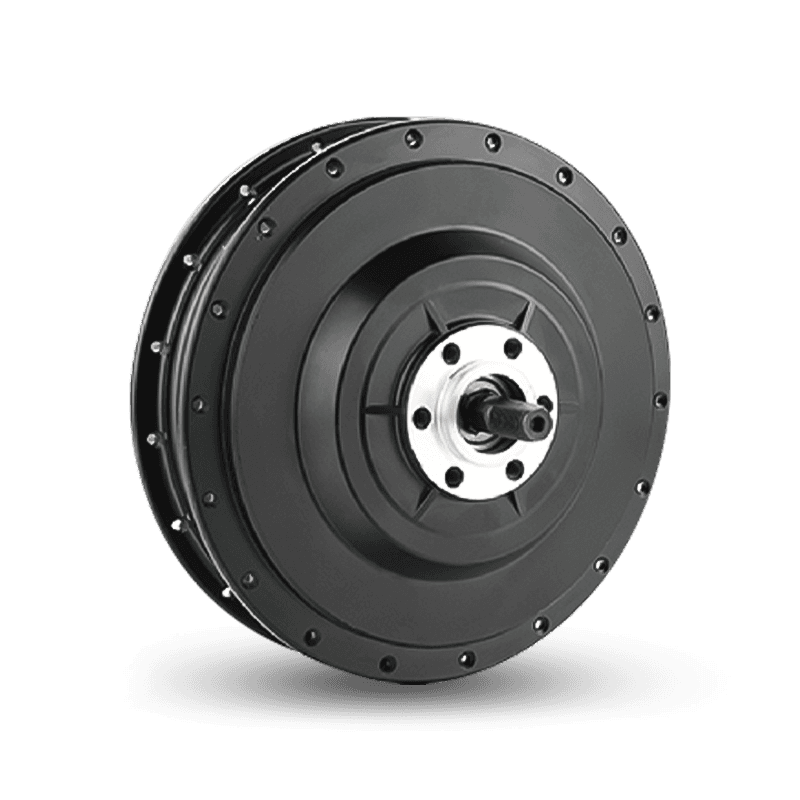 E-Type F500 Front Hub Motor
The E-Type F500 front hub motor is designed for E-Cargo and E-MTB bikes, offerin...
-
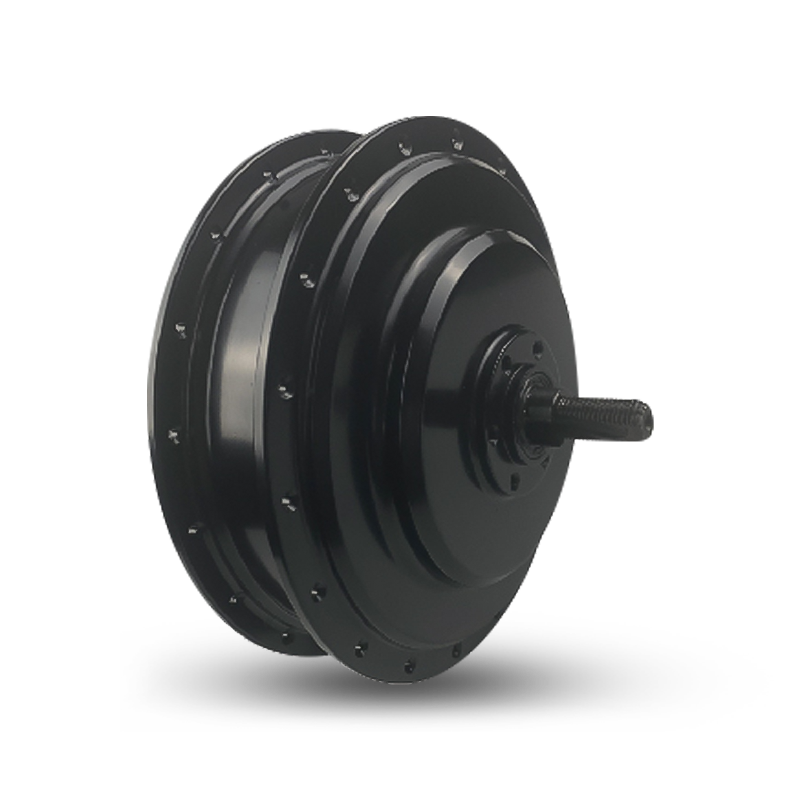 E-Type Pro RC750 Rear Hub Motor
The E-Type Pro RC750 Rear Hub Motor is designed for E-Cargo and E-MTB bikes, com...
-
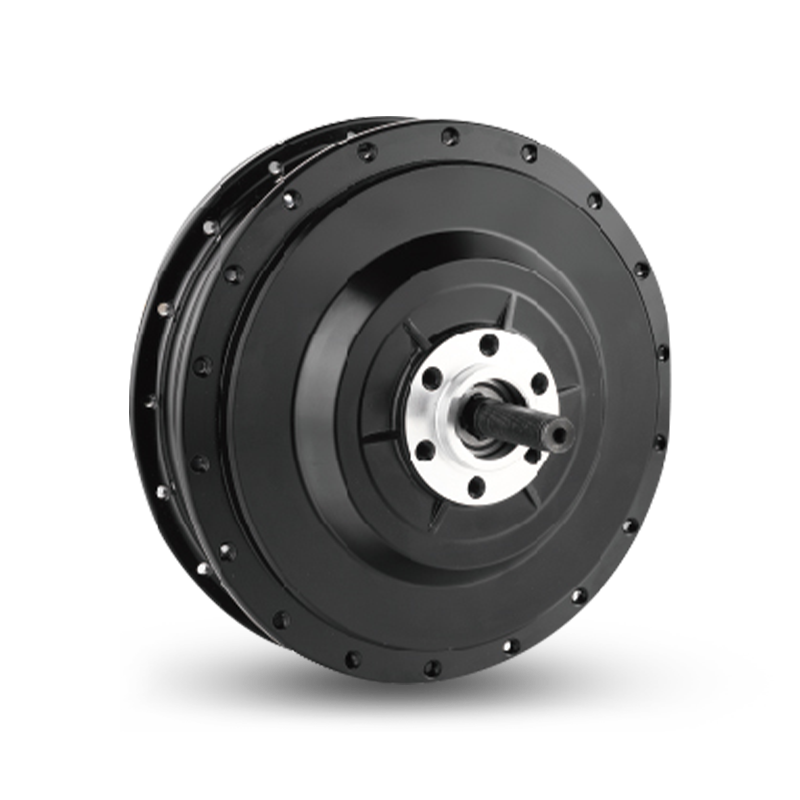 E-Type RF500 Rear Hub Motor
The E-Type RF500 Rear Hub Motor is designed for E-Cargo and E-MTB bikes, compati...
-
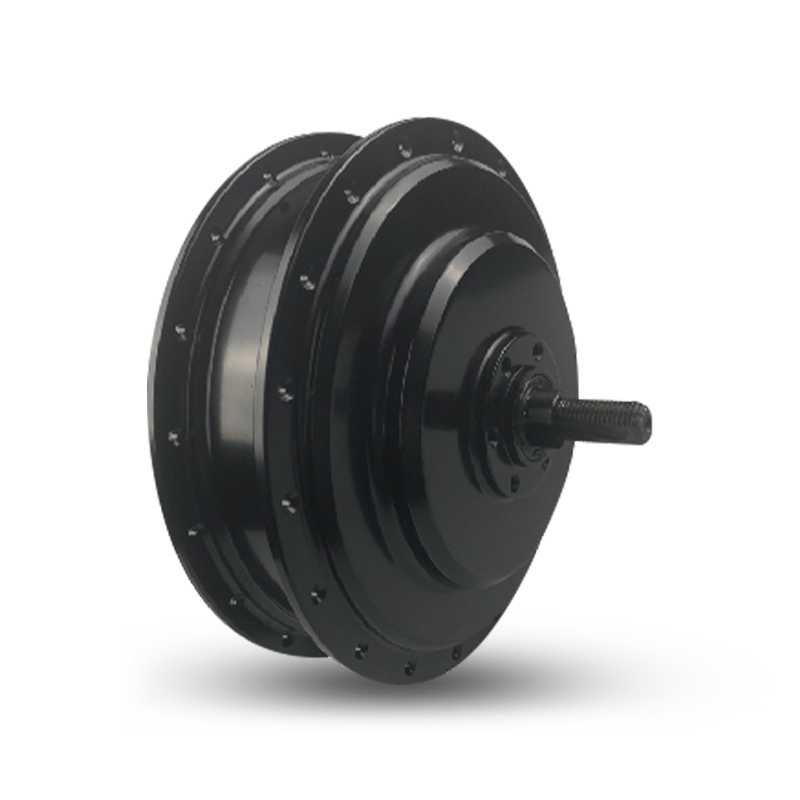 E-Type Pro RF750 Rear Hub Motor
The E-Type Pro RF750 Rear Hub Motor is designed for E-Cargo and E-MTB bikes, com...
-
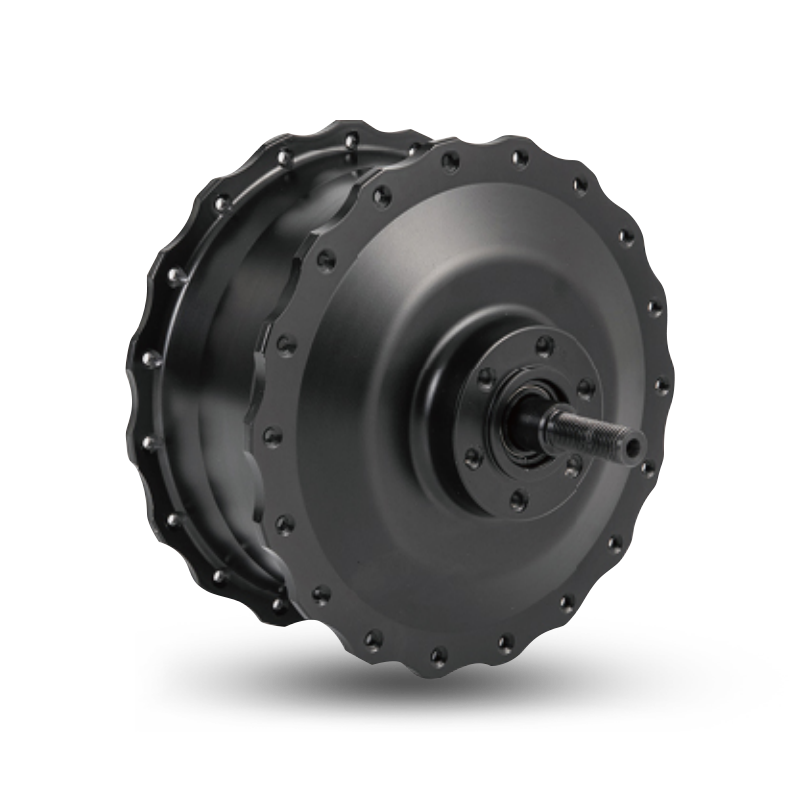 S-Type Pro F1500 Front Hub Motor
The S-Type Pro F1500 front hub motor, designed for E-Carao and E-Fat bikes, offe...
-
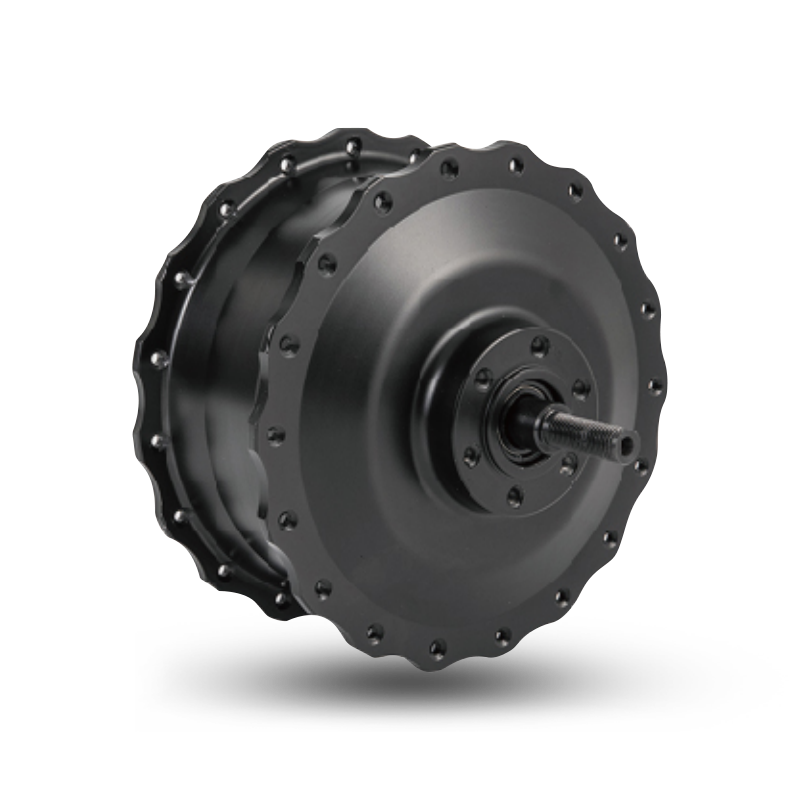 S-Type F750 Front Hub Motor
S-Type F750 is designed for E-Cargo and E-Fat. The rated power ranges from 500W ...
-
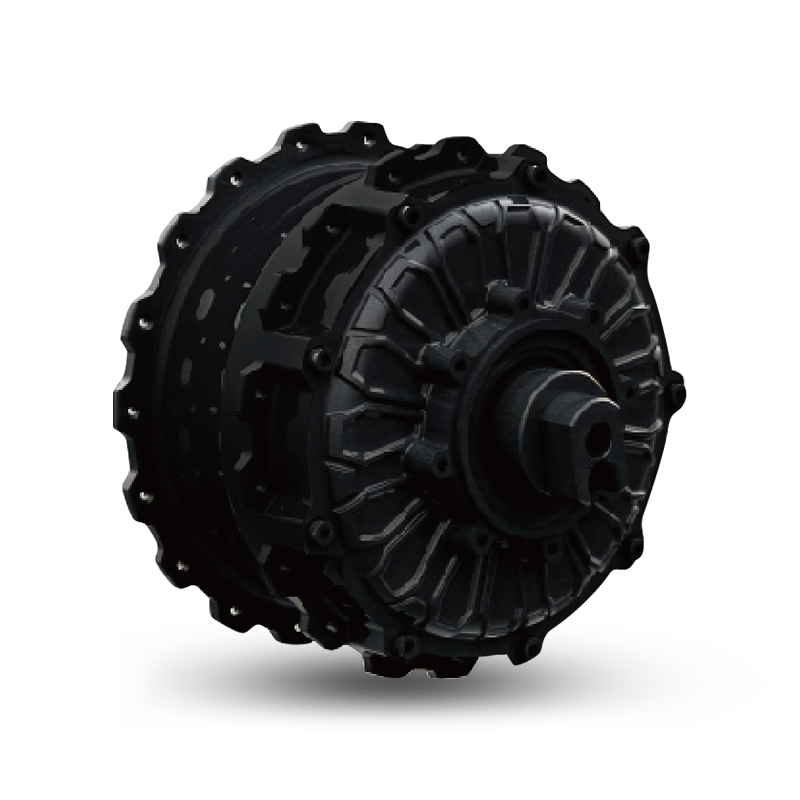 S-TYPE Max THRU AXLE Rear Hub Motor
The S-TYPE Max thru-axle motor is designed for E-Fat, Moped, and Cargo applicati...
-
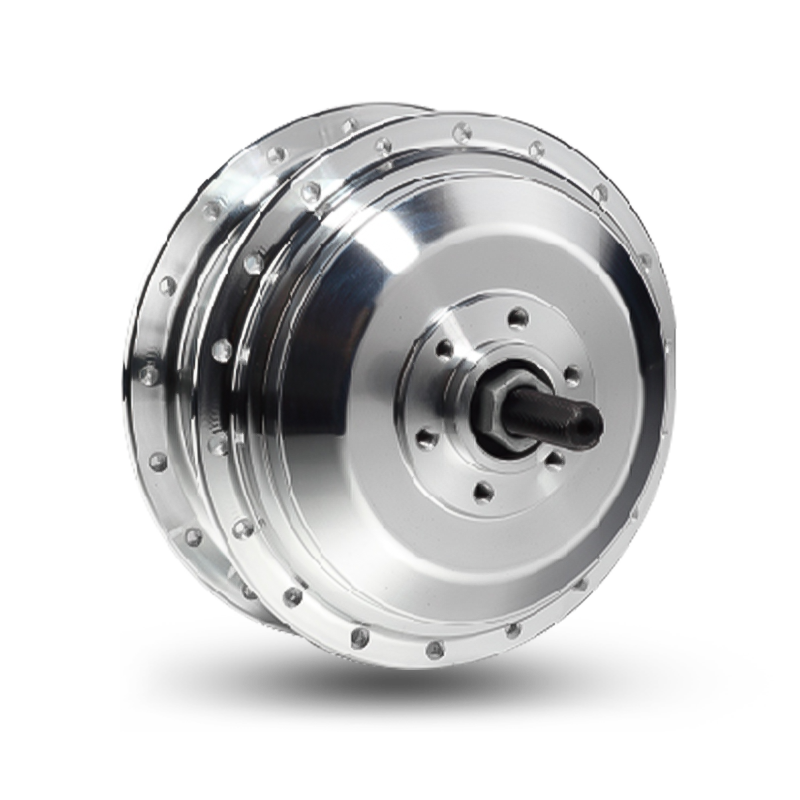 C-Type R350 Rear Hub Motor
The C-Type R350 Rear Hub Motor, designed for city e-bikes, offers a rated power ...
If you are interested in our products, please consult us
Contact Details
- Address:No. 3 Dingqiao Rd, Jiangshan Town, Yinzhou District, Ningbo, Zhejiang Province, China
- Phone: +86 13806662915
- Email: K.zhang@hengtai-cn.com
Products
Quick Link
News Center
Mobile terminal
