


 English
 中文简体
中文简体Don't hesitate to send a message
Geared Hub Motors: A Complete Guide to E-Bike Performance
Content
- 1 Introduction to Hub Motors
- 2 What is a Geared Hub Motor?
- 3 How Geared Hub Motors Work
- 4 Pros and Cons of Geared Hub Motors
- 5 Geared Hub Motor vs. Gearless (Direct Drive)
- 6 Geared Hub Motor vs. Mid-Drive
- 7 Maintenance and Troubleshooting
- 8 Buying Guide: What to Look For
- 9 FAQ: Everything You Need to Know About Geared Hub Motors
Introduction to Hub Motors
When you look at a modern electric bicycle, the magic usually happens right at the center of the wheel. This is the hub motor, a self-contained propulsion system that has become the most popular drive method for e-bikes globally. Unlike a car engine that sits under a hood and sends power through a complex transmission, a hub motor lives inside the wheel hub, applying torque directly to the axle.
In the context of electric bicycles, a hub motor is essentially a brushless DC (BLDC) motor that replaces the standard hub of a front or rear wheel. By integrating the motor directly into the wheel, manufacturers can create sleek, efficient machines that look remarkably like traditional bicycles while providing a powerful "tailwind" to the rider.
A Brief History and Evolution
The concept isn't as "new-age" as one might think. The first patents for electric hub motors date back to the late 19th century—most notably by Ogden Bolton Jr. in 1895. However, for nearly a century, these designs were sidelined by heavy lead-acid batteries and inefficient brushed motors.
The true evolution occurred over the last two decades, driven by three major technological leaps:
- Lithium-Ion Battery Tech: Providing the high energy density needed for long-range travel.
- Neodymium Magnets: Allowing for smaller, more powerful motors.
- Advanced Controllers: The "brains" that precisely manage the flow of electricity to ensure smooth acceleration.
Today, hub motors have branched into two distinct lineages: the massive, silent Direct Drive (Gearless) motors and the compact, punchy Geared Hub Motors. While both have their fans, the geared variant has emerged as the "goldilocks" solution for the everyday commuter, offering a blend of lightweight design and impressive hill-climbing torque.
What is a Geared Hub Motor?
At first glance, a geared hub motor looks like a standard, slightly oversized wheel hub. However, inside that metal casing lies a sophisticated mechanical assembly designed to trade speed for raw power.
Unlike a direct-drive motor, where the outer shell is essentially the motor itself, a geared hub motor contains a high-speed internal motor that spins much faster than the wheel. To bridge the gap between the high-speed motor and the slow-moving wheel, it utilizes a planetary gear set.
The Internal Mechanism: Explaining Planetary Gears
The "planetary" name comes from the arrangement of the gears, which mimics a miniature solar system:
- The Sun Gear: Located at the very center, attached to the high-speed motor shaft.
- The Planet Gears: Usually three small gears (often made of high-strength nylon) that orbit the sun gear.
- The Ring Gear: An outer gear fixed to the hub shell that the "planets" push against to turn the wheel.
By using this reduction system, the internal motor can spin at a high, efficient RPM (Revolutions Per Minute) while the wheel turns at a slower, more manageable pace. This mechanical advantage is what gives these motors their signature "punch" when starting from a dead stop.
How It Differs from Direct Drive (Gearless) Motors
The fundamental difference is mechanical leverage.
- Direct Drive: These are essentially large magnets and coils attached directly to the axle. They are heavy and silent but lack the low-end torque of a geared system unless they are physically massive.
- Geared Hub: Because of the internal gearing, a 5lb geared motor can often produce the same starting torque as a 15lb direct-drive motor. Additionally, geared motors feature an internal freewheel (clutch), which allows the wheel to spin independently of the motor's internals when you aren't using the throttle.
Common Power Ratings: From 250W to 750W
Geared hub motors are typically categorized by their continuous wattage, which dictates how much "work" they can do over time:
- 250W: The legal standard in the EU and UK. These are lightweight, stealthy, and perfect for flat urban commutes.
- 350W - 500W: The "sweet spot" for North American commuters, providing enough power to tackle moderate hills without draining the battery too quickly.
- 750W: The legal limit for Class 1 and Class 2 e-bikes in many US states. These are torque monsters capable of hauling heavy cargo or climbing steep inclines with ease.
How Geared Hub Motors Work
To understand how a geared hub motor moves your bike, you have to look at the relationship between RPM (Revolutions Per Minute) and Torque. In the world of electric motors, smaller motors love to spin fast—often much faster than a bicycle wheel needs to turn.
The Relationship Between Motor RPM and Wheel Rotation
A typical bicycle wheel spins at roughly 200 to 300 RPM at cruising speeds. However, a small brushless DC (BLDC) motor is most efficient when spinning at 2,000 to 4,000 RPM.
If you connected a small motor directly to the axle, it would struggle to start moving and would likely overheat. The geared hub motor solves this by letting the internal motor "sing" at its preferred high speed while the wheel turns at a slower, more powerful pace.
The Role of the Reduction Ratio
The secret sauce is the reduction ratio, which is determined by the planetary gear set. Most geared hub motors use a ratio between 4:1 and 5:1.
- What this means: For every five times the internal motor spins, the wheel spins once.
- The Result: This "gearing down" multiplies the motor's torque. It’s exactly like putting your car or a multi-speed mountain bike into a low gear to climb a steep hill—you gain massive pulling power at the expense of raw top-end speed.
Why Freewheeling Matters for Pedaling Efficiency
One of the most significant mechanical features of a geared hub motor is the internal one-way clutch or freewheel.
In a direct-drive motor, the magnets and copper coils are always "engaged." If you run out of battery, you have to push against the magnetic resistance (cogging torque) of the motor, which feels like pedaling through mud.
In a geared hub motor, the clutch allows the motor to disengage from the wheel entirely when it isn't powered.
- Zero Drag: When you pedal without the motor, the wheel spins freely on its bearings just like a standard bike.
- Battery Savings: You can coast down hills without the motor's internal parts spinning, preserving energy and making the bike feel much more natural to ride.
Pros and Cons of Geared Hub Motors
Choosing the right motor is often a game of trade-offs. While geared hub motors are the "gold standard" for the average rider, they aren't without their quirks. Understanding these strengths and weaknesses will help you decide if they fit your specific riding style.
Advantages
- High Torque-to-Weight Ratio: Because of the internal gear reduction, these motors punch way above their weight class. A 3kg geared motor can often out-climb a 6kg direct-drive motor on steep inclines.
- Lightweight and Compact: Their smaller physical footprint makes them much more "stealthy." From a distance, it’s hard to tell a geared hub motor apart from a slightly beefy internal gear hub, keeping the classic bicycle aesthetic intact.
- No Motor Drag: As mentioned, the internal clutch is a game-changer. If your battery dies or you just want to get some exercise, you can pedal without feeling like you’re dragging an anchor.
- Better Efficiency at Low Speeds: Geared motors stay in their "efficiency band" even when you are climbing slowly, meaning they generate less heat and conserve more battery life during hilly commutes.
Disadvantages
- Mechanical Noise: Unlike the eerie silence of a direct-drive motor, geared hubs have a distinct "whir" or "hum" caused by the internal planetary gears meshing at high speeds.
- Potential for Gear Wear: The internal gears—usually made of nylon to reduce noise and weight—are a wear item. Over several thousand miles, or under extreme heat/overloading, these teeth can strip or wear down, requiring a relatively simple but necessary internal replacement.
- Lower Top Speeds: Because they are geared for torque, they generally "tap out" at lower speeds than direct-drive motors. If you’re looking to hit 35+ mph (56 + km/h), a geared hub likely isn't the right tool for the job.
- Complexity: More moving parts means more things that could theoretically go wrong compared to the dead-simple construction of a gearless motor.
| Feature | Geared Hub Motor | Direct Drive (Gearless) |
| Weight | Lightweight (5–9 lbs) | Heavy (12–20+ lbs) |
| Steep Hills | Excellent | Average (needs high power) |
| Pedal Drag | None (Freewheels) | Noticeable (Magnetic drag) |
| Durability | High (Gears may wear) | Very High (No moving parts) |
Geared Hub Motor vs. Gearless (Direct Drive)
Choosing between a geared hub and a direct drive (DD) motor is the most common crossroads for e-bike builders and buyers. While both sit in the wheel, they offer polar opposite riding experiences. Think of it as choosing between a nimble turbocharged sedan (Geared) and a heavy-duty diesel truck (Direct Drive).
Size, Weight, and Stealthiness
The most immediate difference is visual.
- Geared Motors: These are compact, often hiding behind the cassette or disc brake rotor. Because they use internal gears to multiply torque, the actual motor can be small. A typical 500W geared motor weighs about 3–4 kg (7–9 lbs).
- Direct Drive Motors: These are large, heavy "pancakes." To get enough torque without gears, they require massive magnets and a large diameter. They often weigh 6–9 kg (13–20+ lbs), making the bike feel rear-heavy and noticeably "electric."
Torque Efficiency at Low Speeds
This is where the geared motor shines.
- Geared Efficiency: Because the internal motor spins fast even when the bike is moving slowly, it stays in its "sweet spot" of efficiency. This results in excellent stop-and-go performance in city traffic and better hill-climbing without overheating.
- Direct Drive Struggle: At low speeds (like starting on a steep hill), a DD motor is inefficient. It draws massive amounts of current from the battery, but much of that energy is wasted as heat rather than movement until the bike picks up speed.
Regenerative Braking: The Direct Drive Edge
There is one major feature geared motors almost never have: Regenerative Braking (Regen).
- Direct Drive: Since the motor is always "locked" to the wheel's rotation, the controller can reverse the flow of electricity, using the motor as a generator to slow the bike down and put a small amount of energy (usually 5–10%) back into the battery. This also saves your brake pads.
- Geared Hub: Because geared motors have an internal freewheel/clutch, the motor physically disconnects when you aren't applying power. The wheel spins, but the motor stays still. Therefore, it cannot "grab" the wheel to generate electricity or provide braking force.
Comparison Summary: Which is for you?
| Feature | Geared Hub Motor | Direct Drive (Gearless) |
| Best For | Commuting, hills, lightweight builds | High speed, flat roads, heavy cargo |
| Noise Level | Audible "whir" | Silent |
| Maintenance | Gears may need grease/replacement | Virtually zero maintenance |
| Pedaling | Feels like a normal bike | Feels like pedaling with a slight drag |
Geared Hub Motor vs. Mid-Drive
In the e-bike world, the debate between hub motors and mid-drives is the ultimate showdown. While a geared hub motor sits in the wheel, a mid-drive motor is located at the bike's crank (where the pedals are), driving the chain directly. Both have dedicated fan bases, but they serve very different purposes.
Cost-Effectiveness and Ease of DIY Installation
If you are looking at your wallet or your toolbox, the geared hub motor usually wins by a landslide.
- Plug-and-Play: Installing a geared hub motor is often as simple as swapping a wheel and mounting a battery. There’s no need to take apart the bottom bracket or mess with the bike's fundamental geometry.
- Affordability: Because the design is simpler and doesn't require a specialized frame, geared hub motor kits and pre-built bikes are significantly cheaper—often costing $300 to $800 less than an equivalent mid-drive system.
Drivetrain Wear: Hub Motors vs. Chain-Driven Systems
This is the "hidden cost" of mid-drive motors.
- The Hub Advantage: A geared hub motor bypasses the chain, gears, and derailleur entirely. It pushes the wheel directly. This means you can have a massive 750W motor without putting a single ounce of extra stress on your chain. If your chain snaps, a hub motor can still get you home.
- The Mid-Drive Challenge: A mid-drive pulls on the chain just like you do, but with much more force. This leads to accelerated drivetrain wear. You’ll likely find yourself replacing chains and cassettes much more frequently if you aren't careful with your shifting.
Best Use Cases: Urban Commuting vs. Mountain Biking
The choice often comes down to where you ride:
- Geared Hub Motor (The Commuter's Choice): Perfect for paved roads, gravel paths, and moderate hills. It's reliable, requires almost zero maintenance of the bike's gears, and allows for a "throttle-only" mode that doesn't care what gear your bike is in.
- Mid-Drive Motor (The Off-Roader's Choice): Because a mid-drive uses the bike's actual gears, it can shift into a "granny gear" for vertical mountain climbs. This makes it the king of technical mountain biking (eMTB) where balance and extreme torque at low speeds are required.
Pro Tip: If you want a bike that "just works" for getting to work every day without grease on your hands, a geared hub motor is the practical winner. If you want to climb literal mountains, look toward a mid-drive.
Maintenance and Troubleshooting
While geared hub motors are remarkably reliable, they aren't "set it and forget it" forever. Because they contain moving internal parts, they require a bit more mechanical sympathy than their gearless cousins. Here is how to keep yours spinning smoothly for thousands of miles.
When and How to Replace Internal Nylon Gears
The most common failure point in a geared motor is the planetary gear set. Most manufacturers use high-strength nylon gears because they are quiet and act as a "mechanical fuse"—if the motor draws too much torque, the gears strip rather than the expensive motor coils burning out.
- Signs of Failure: A sudden increase in mechanical noise (grinding or buzzing) or the motor spinning internally without the bike moving.
- The Lifespan: Expect to get 3,000 to 5,000 miles ($4,800$ to $8,000$ km) out of a set of nylon gears, depending on how hard you climb hills.
- The Fix: You don't need a new motor! Most geared hubs allow you to open the side casing with a few bolts and swap the entire gear clutch assembly for about $30–$60.
Proper Lubrication Techniques
Heat is the enemy of grease. Over time, the factory grease inside the hub can migrate to the edges of the casing or dry out.
- What to use: Use a high-quality white lithium grease or a specialized synthetic grease like Mobilegrease 28.
- The Rule: Never over-fill the hub. A light, even coating on the gear teeth is all you need. Too much grease creates "churning" which leads to overheating and can actually degrade the nylon.
Diagnosing Common Controller and Hall Sensor Issues
If your motor is stuttering, vibrating, or refusing to start, the problem is likely electrical, not mechanical.
The "Stutter" (Phase Issues): If the motor jerks but won't spin, check the three thick "Phase" wires. A loose connector or a melted wire (common on high-wattage setups) is usually the culprit.
Hall Sensor Failure: Most geared motors use Hall sensors to tell the controller the motor's position. If one fails, the motor may feel "clunky" or show an "Error 07" on your display.
- Quick Tip: Many modern controllers have a "Sensorless" mode that allows the motor to run even if a Hall sensor dies.
Water Ingress: If you ride in heavy rain, moisture can enter through the axle cable. Always ensure your cable has a "drip loop"—a small downward U-shape before the cable enters the axle—so water drips off the wire instead of running into the motor.
| Symptom | Likely Cause | Fix |
| Loud Grinding | Stripped Nylon Gears | Replace Gear Set |
| Motor Spins, Bike Doesn't | Broken One-Way Clutch | Replace Internal Clutch/Gear assembly |
| Intermittent Power | Loose Connector/Hall Sensor | Check/Tighten Plugs |
| Hot Hub Shell | Overloading on Steep Hills | Reduce Throttle; Pedal More |
Buying Guide: What to Look For
Before you click "buy" on a geared hub motor, you need to ensure it will physically and safely fit your bicycle. Unlike mid-drives, which care about your bottom bracket, hub motors are all about the dropouts—the slots where your wheel axle slides into the frame.
Dropout Width Compatibility
The distance between your dropouts is technically known as the O.L.D. (Over-Locknut Dimension). If the motor is too wide, you can't install it; if it’s too narrow, you’ll have a dangerous amount of play.
- Front Hubs: Almost all standard front forks use a 100mm width.
- Rear Hubs: The standard for most modern commuters and mountain bikes is 135mm.
- Fat Bikes: These require much wider hubs, typically 175mm to 190mm.
- Thru-Axles: Be careful! Most geared hub motors use a threaded "bolt-on" axle. If your bike uses a modern 142mm or 148mm (Boost) thru-axle, you will need a specialized motor designed specifically for those frames.
Disc Brake vs. Rim Brake Support
Most geared hub motors come with a standard 6-bolt ISO mount for a disc brake rotor.
- If you have disc brakes: Ensure the motor casing provides enough "offset" (clearance) so your brake caliper doesn't rub against the motor shell.
- If you have rim brakes (V-brakes): You can still use a motor with a disc mount; you’ll just leave it empty. However, ensure the motor is laced into a rim with a machined braking surface.
Torque Arm Requirements
This is the most critical safety step. A geared hub motor applies a massive amount of "twisting" force to your dropouts.
- Aluminum Frames: These are prone to "axle spin-out," where the motor actually shreds the soft aluminum dropouts and rips the wires out. A torque arm is mandatory for any motor over 250W on an aluminum frame.
- Steel Frames: Steel is more resilient, but for motors 500W and above, a torque arm is still highly recommended to prevent the dropouts from gradually widening over time.
Comparison Checklist
| Feature | What to Verify |
| Axle Type | 10mm flat-sided axle (standard) vs. 12mm/thru-axle |
| Brake Type | 6-bolt rotor mount vs. rim-brake-only rim |
| Cassette/Freewheel | Does it take a screw-on freewheel or a modern slide-on cassette? |
| Spoke Gauge | Ensure the motor uses 12G or 13G (heavy duty) spokes |
FAQ: Everything You Need to Know About Geared Hub Motors
Are geared hub motors noisy?
While they are not silent like direct-drive motors, high-quality geared hubs (especially those using HENTACH’s patented nylon-steel gears) produce only a faint, high-pitched whir. At cruising speeds, wind noise usually drowns out the motor sound entirely.
Can I ride a geared hub motor in the rain?
Yes, most are rated IP54 or IP65 for water resistance. However, you should never submerge the motor in water (like deep puddles). Always ensure your power cable has a "drip loop" to prevent water from following the wire into the axle.
How long do the internal gears last?
Standard nylon gears typically last 3,000–5,000 miles. However, premium motors using reinforced materials and proper lubrication can last significantly longer. As proven by HENTACH’s durability tests, well-engineered geared motors can exceed 30,000 miles of real-world use.
Do geared hub motors have regenerative braking?
Generally, no. Because geared hub motors feature an internal clutch for "freewheeling," the motor cannot stay engaged with the wheel to generate electricity when you slow down.
Is a front or rear geared hub motor better?
- Rear Hub: Better for traction and "natural" bicycle feel. It is the standard for high-torque applications.
- Front Hub: Easier to install and creates an "All-Wheel Drive" effect if you are pedaling hard. However, it can lose traction on loose gravel or steep hills.
OUR PRODUCTS
Recommended Products
-
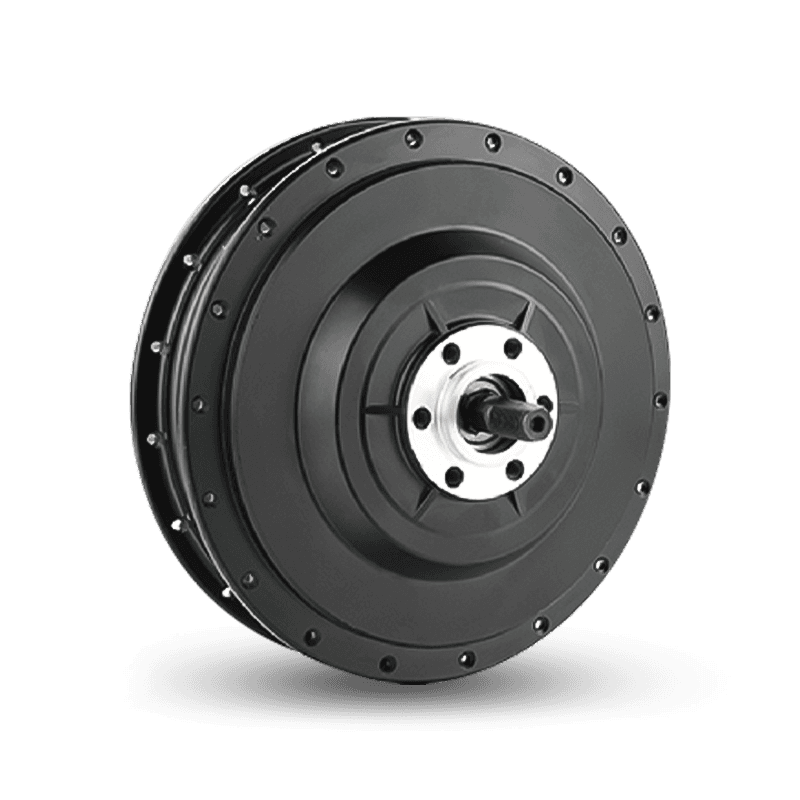 E-Type F500 Front Hub Motor
The E-Type F500 front hub motor is designed for E-Cargo and E-MTB bikes, offerin...
-
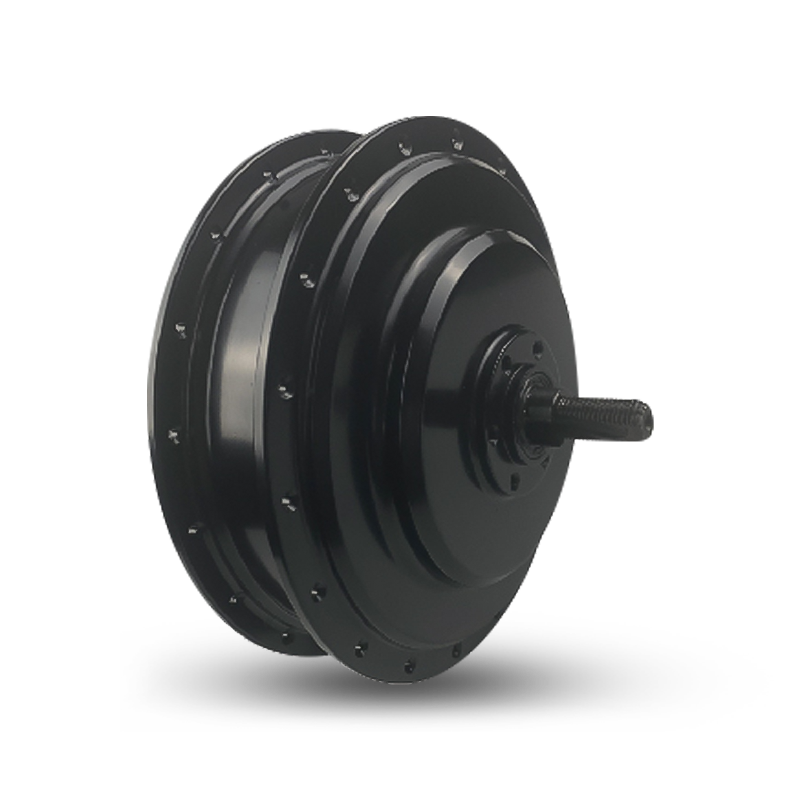 E-Type Pro RC750 Rear Hub Motor
The E-Type Pro RC750 Rear Hub Motor is designed for E-Cargo and E-MTB bikes, com...
-
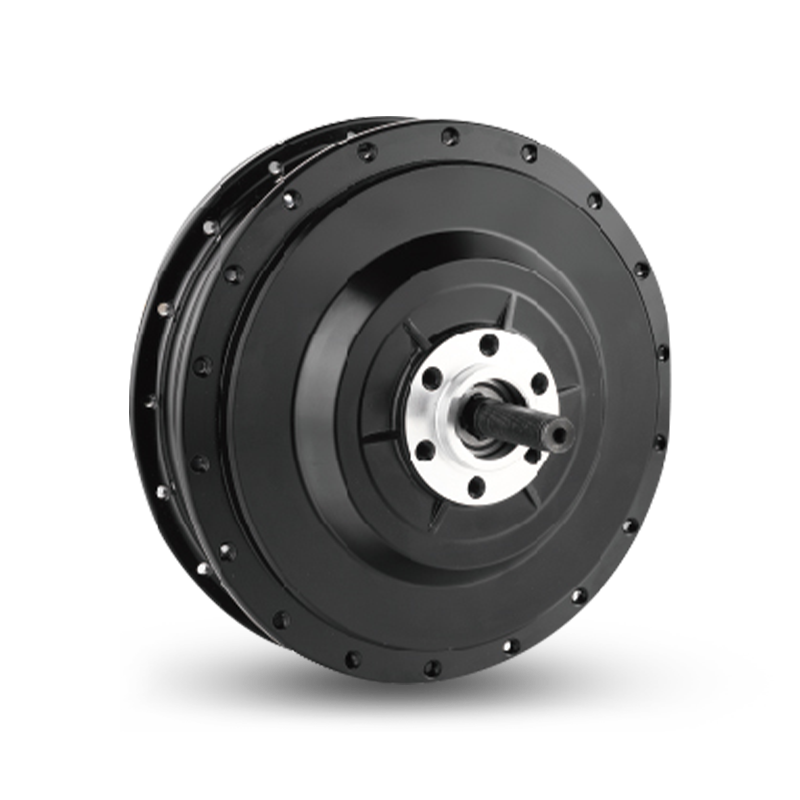 E-Type RF500 Rear Hub Motor
The E-Type RF500 Rear Hub Motor is designed for E-Cargo and E-MTB bikes, compati...
-
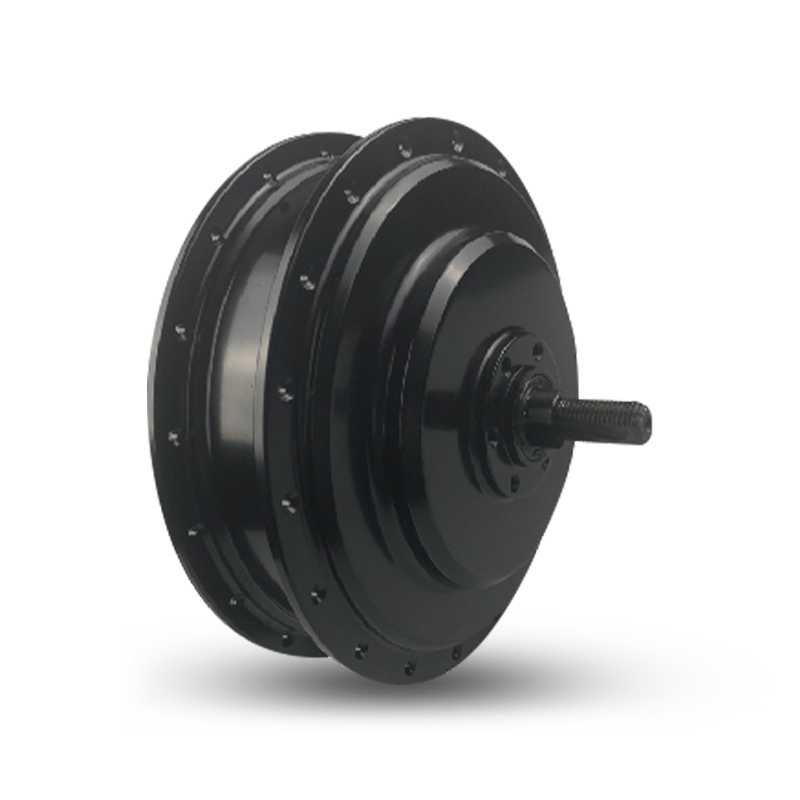 E-Type Pro RF750 Rear Hub Motor
The E-Type Pro RF750 Rear Hub Motor is designed for E-Cargo and E-MTB bikes, com...
-
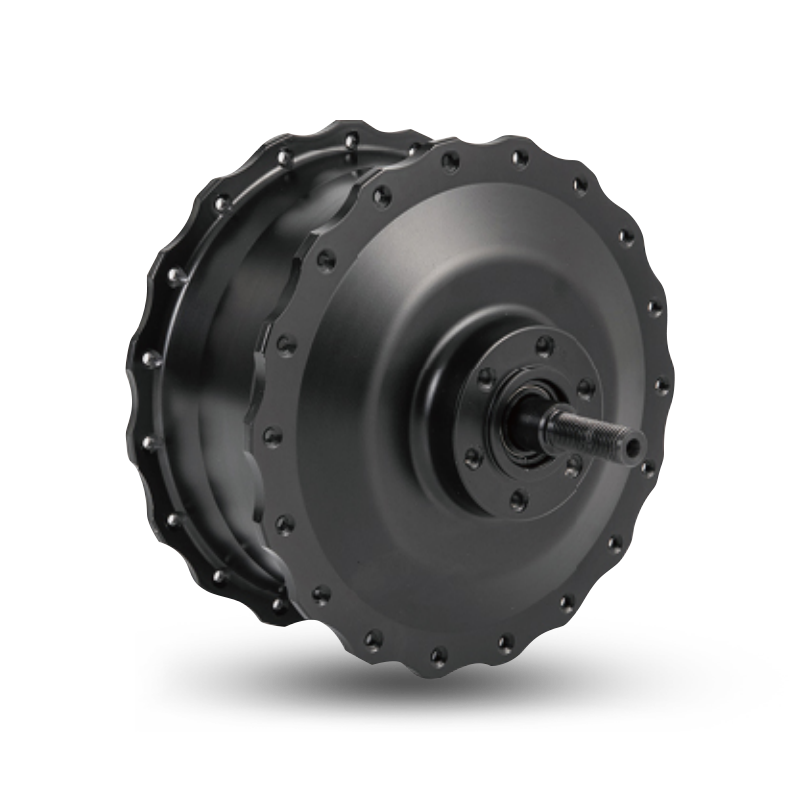 S-Type Pro F1500 Front Hub Motor
The S-Type Pro F1500 front hub motor, designed for E-Carao and E-Fat bikes, offe...
-
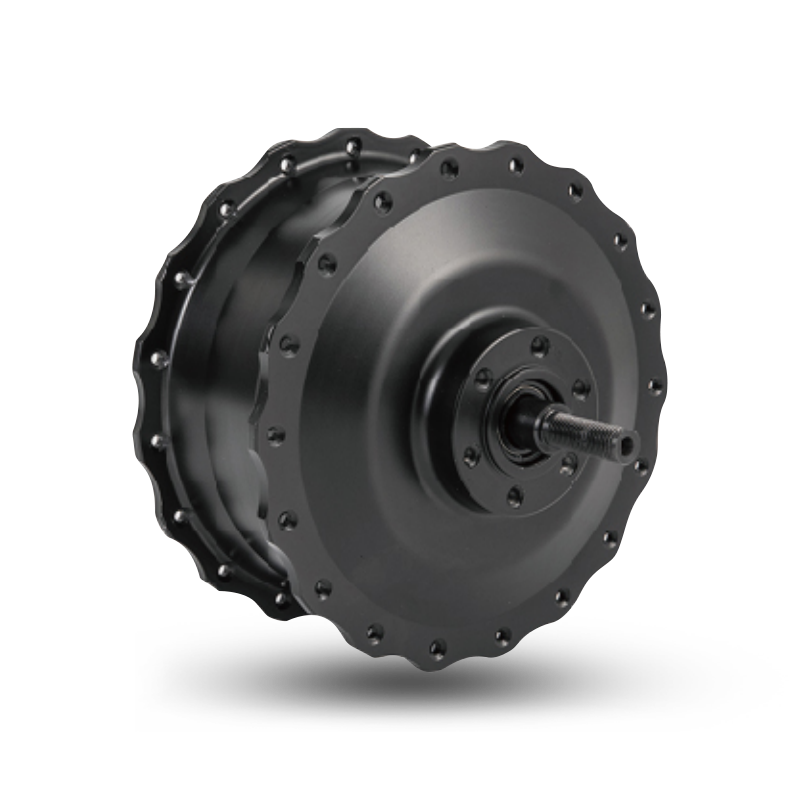 S-Type F750 Front Hub Motor
S-Type F750 is designed for E-Cargo and E-Fat. The rated power ranges from 500W ...
-
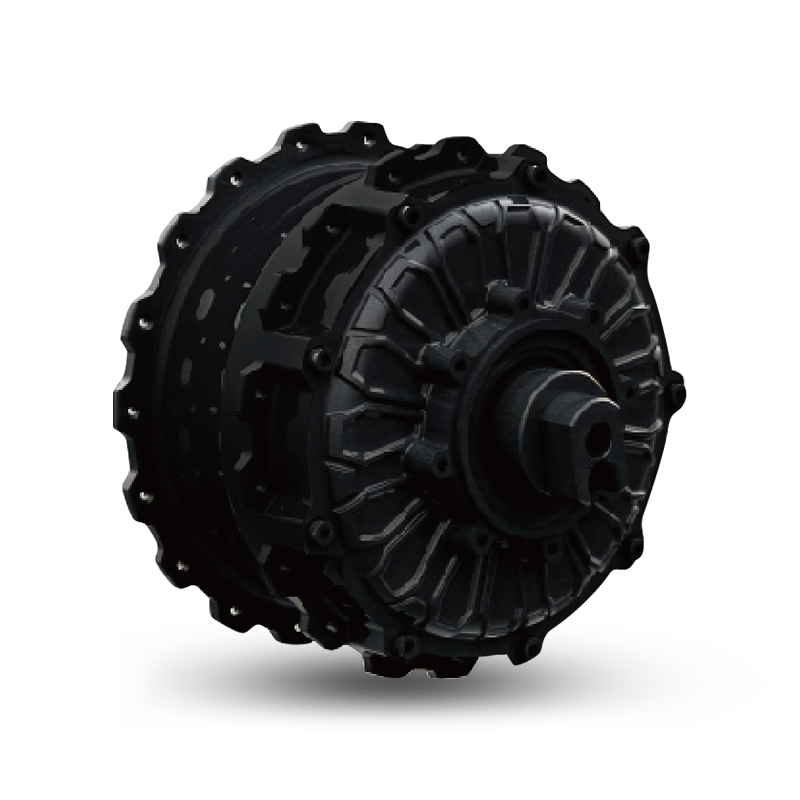 S-TYPE Max THRU AXLE Rear Hub Motor
The S-TYPE Max thru-axle motor is designed for E-Fat, Moped, and Cargo applicati...
-
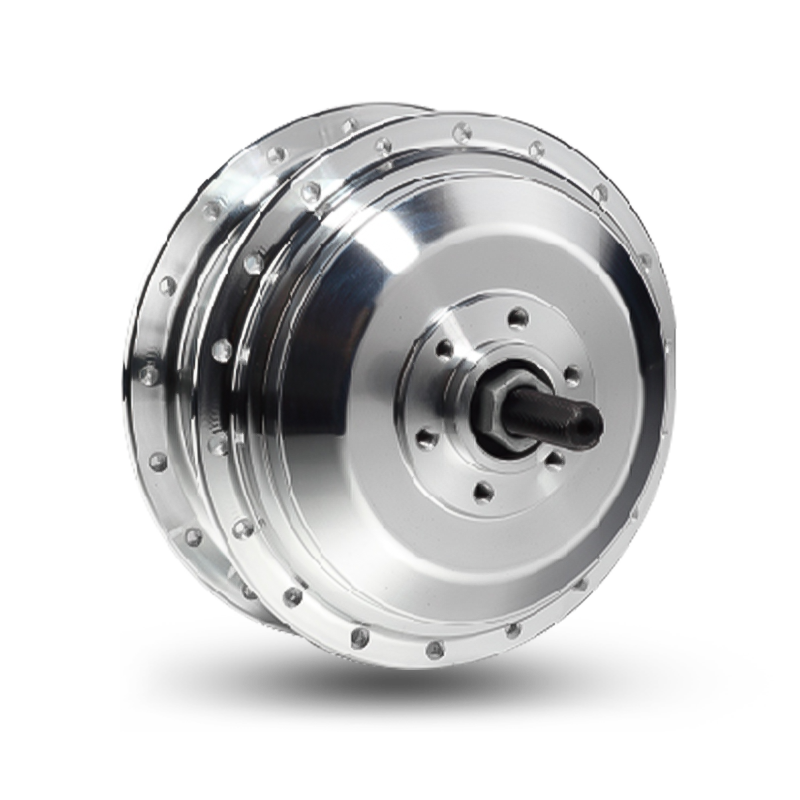 C-Type R350 Rear Hub Motor
The C-Type R350 Rear Hub Motor, designed for city e-bikes, offers a rated power ...
If you are interested in our products, please consult us
Contact Details
- Address:No. 3 Dingqiao Rd, Jiangshan Town, Yinzhou District, Ningbo, Zhejiang Province, China
- Phone: +86 13806662915
- Email: K.zhang@hengtai-cn.com
Products
Quick Link
News Center
Mobile terminal
